
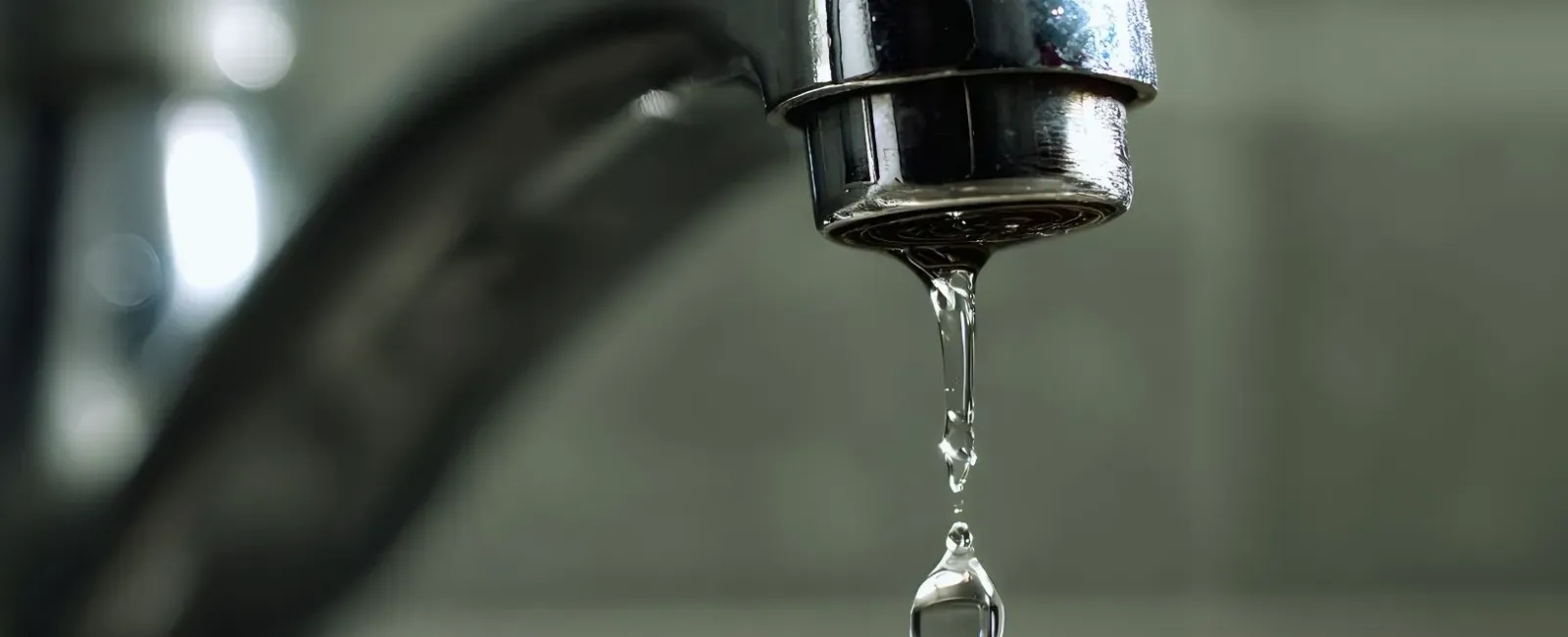
If your faucet continues dripping after you've turned it off completely, you're not alone; it's one of the most common plumbing problems homeowners face. That persistent drip can waste 3,000+ gallons of water per year, add $30-50 to your annual water bill, and leave stains in your sink or tub.
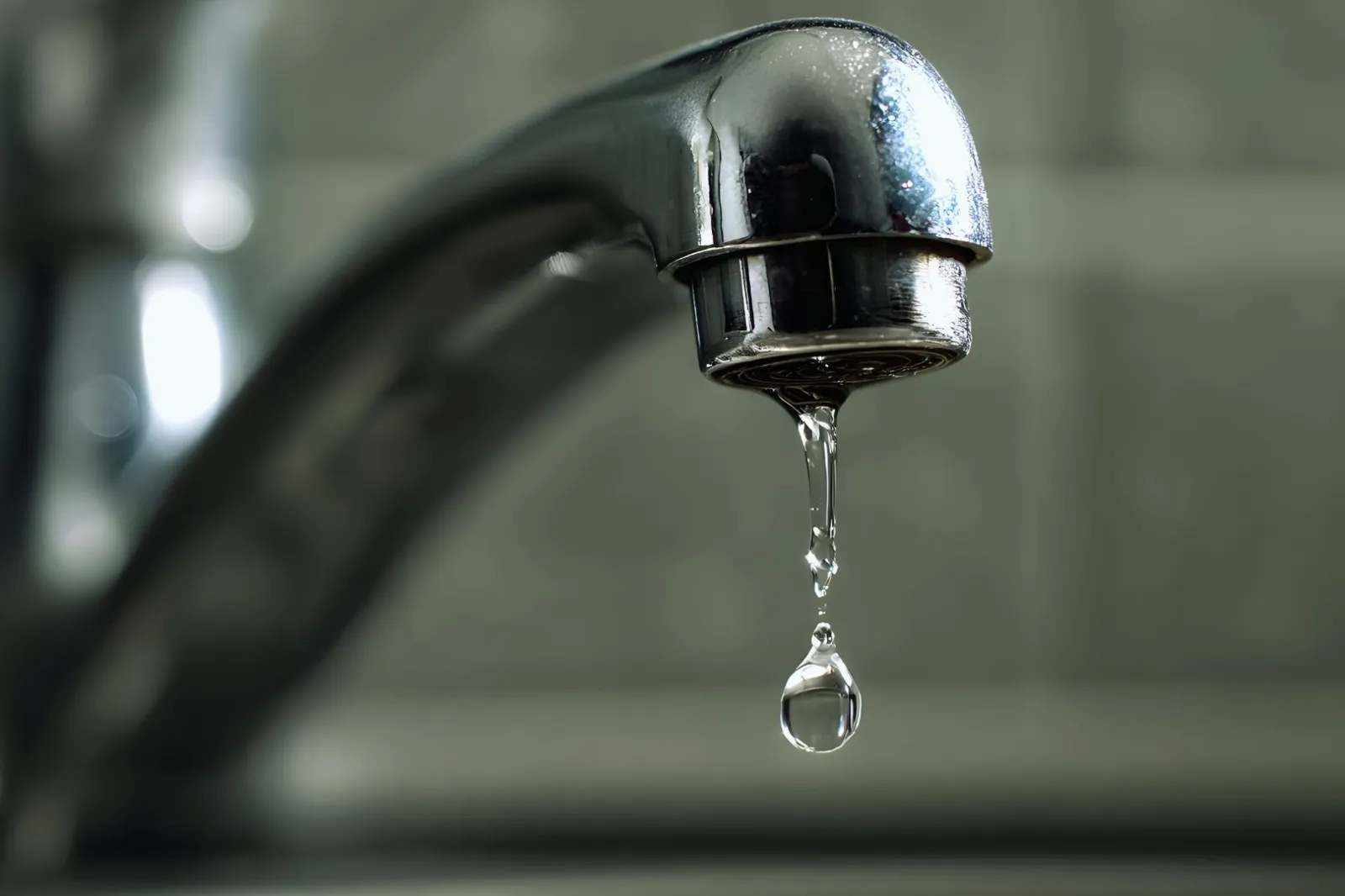
After diagnosing thousands of dripping faucets since 1923, our licensed plumbers know most homeowners assume they need a complete faucet replacement. In reality, about 85% of dripping faucets can be fixed by replacing a single worn component. Here are the causes of continuous dripping and how to stop it for good.
8 Causes of a Faucet That Won't Stop Dripping - Ranked by Frequency
Based on hundreds of dripping faucet repairs we've completed throughout North Metro Atlanta, here are the eight most common causes, ranked from most to least frequent:
1. Worn or Damaged Washers (45% of Cases)
What's happening: A washer is a rubber or silicone disc that creates a watertight seal in compression faucets (the traditional type with separate hot and cold handles). When you turn off the water, the washer presses against the valve seat to stop the flow. Over time, friction from daily use wears the washer down; it becomes thin, cracked, or hardened, allowing water to seep past and drip.
Why washers wear out:
- Constant friction from daily use
- Water pressure stress when the faucet is closed
- Chlorine and water treatment chemicals are breaking down rubber
- Hot water is causing repeated expansion and contraction
- Hard water mineral deposits reduce pliability
- Wrong size or poor quality replacement washers
Solution: Replace the worn washer with the correct size for your faucet model. Turn off the water supply, remove the handle and packing nut, pull out the valve stem, and replace the washer at the bottom (take the old one to the hardware store for an exact match). Many homeowners DIY this repair successfully. However, if you're unsure of your faucet type or if it keeps dripping after replacement, our licensed plumbers can identify your specific model and install the correct parts to guarantee it stops dripping.
2. Corroded or Damaged Valve Seat (25% of Cases)
What's happening: The valve seat is the metal piece that the washer presses against to stop water flow. Over time, it can become corroded, pitted, or worn, especially in hard water areas. When the surface becomes rough or uneven, even a new washer can't form a watertight seal, causing persistent dripping. This is why replacing the washer sometimes doesn't fix the problem.
Why valve seats corrode:
- Hard water mineral buildup creates rough, uneven surfaces
- Chlorine and water treatment chemicals are eating away at the brass
- Washer friction wears grooves into the seat
- Sediment particles (sand, rust, minerals) act like sandpaper
- Lack of cleaning during routine maintenance
Solution: Minor corrosion can be corrected by resurfacing the valve seat with a valve seat dresser tool (available at hardware stores). Severe damage requires removing and replacing the valve seat entirely; this takes special wrenches and proper torque to avoid damaging the faucet body. Our plumbers use professional valve seat tools to resurface or replace seats correctly, ensuring a lasting repair.
3. Worn or Loose O-Rings (15% of Cases)
What's happening: O-rings are small rubber rings that create seals around the valve stem and where faucet components connect. When O-rings become worn, cracked, or displaced, water leaks past them, sometimes dripping from the spout if the O-ring is near the spout connection. O-rings are particularly common in cartridge-style and single-handle faucets.
Why O-rings fail:
- Age and hardening after years of water exposure
- Chlorine and chemicals are causing the rubber to crack
- Improper installation or wrong size replacement
- Loss of lubrication; O-rings need plumber's grease to stay flexible
Solution: Replace worn O-rings with the correct size and coat them with plumber's grease. This requires disassembling the handle, removing the cartridge or valve stem, and identifying which O-rings need replacement. The challenge is that Moen, Delta, Kohler, and Pfister each use different O-ring sizes and placements, using the wrong size or skipping lubrication leads to continued leaking. Our licensed plumbers stock O-rings for all major brands and ensure proper assembly for leak-free operation.
4. Failed Cartridge (10% of Cases)
What's happening: Modern single-handle faucets and many two-handle models use cartridges instead of traditional compression valves. The cartridge is a self-contained assembly (plastic, ceramic, or brass) that controls both water flow and temperature. When cartridges fail, internal seals wear out, ceramic discs crack, or components break, they can't fully shut off water flow, causing continuous dripping even with the handle off.
Why cartridges fail:
- Sediment scratching ceramic surfaces
- Internal seal deterioration after 8-15 years
- Hard water mineral buildup is preventing complete closure
- Manufacturing defects (manufacturers often provide free replacements)
- Thermal stress warping plastic components
Solution: Replace the entire cartridge with the correct model for your faucet brand. Each manufacturer uses proprietary cartridges; you must identify your exact faucet model (check under the sink or look for the brand logo) and obtain the matching part. Cartridge orientation during installation is critical; installing it incorrectly causes hot/cold reversal or continued leaking. Our plumbers can identify your faucet brand and install manufacturer-specified cartridges guaranteed to restore proper function.
5. Excessive Water Pressure (3% of Cases)
What's happening: Normal residential water pressure is 45-80 PSI. When pressure exceeds 80 PSI, it forces water past seals that would otherwise work fine, explaining why some faucets drip only at night when municipal pressure peaks during low neighborhood usage. High pressure also accelerates wear on all plumbing components, causes water hammer (banging pipes), and leads to premature appliance failure.
Why pressure causes dripping:
- Excessive force pushes water through tiny gaps in seals
- Constant high pressure deforms washers and O-rings permanently
- Failed pressure regulators or municipal system changes
- Thermal expansion from water heaters without expansion tanks
Solution: Test your pressure with a gauge ($10-15 at hardware stores) attached to an outdoor hose bib. If it exceeds 80 PSI, you need a pressure-reducing valve (PRV) on your main water line to bring it down to a safe 50-60 PSI. If you already have a PRV and pressure remains high, the regulator has failed and needs to be replaced. Our licensed plumbers can test your water pressure and install or replace pressure regulators to protect your entire plumbing system.
6. Loose or Worn Packing Nut (1.5% of Cases)
What's happening: The packing nut sits just under the handle of a compression faucet, with packing material beneath it that seals around the valve stem. When this nut loosens, or the packing wears out, water leaks around the stem. Sometimes this water travels down inside the faucet body and exits through the spout, appearing as a spout drip even though the actual leak is at the packing nut.
Why packing nuts loosen:
- Daily handle use is gradually loosening the threads
- Packing material hardens and loses its seal over time
- Temperature expansion cycles loosen connections
Solution: Try tightening the packing nut clockwise with an adjustable wrench (remove handle first). Snug is sufficient; don't overtighten. If that doesn't work, the packing material needs to be replaced: remove the nut, replace the old packing string or O-rings, and reassemble. Our plumbers can repack valve stems and adjust packing nuts to correct torque without damaging threads.
7. Worn Ceramic Disc Assembly (0.5% of Cases)
What's happening: High-end faucets often use ceramic disc valves, which consist of two polished ceramic discs that slide against each other to control water flow. These are extremely durable (typically 20-30 years), but when they fail, it's usually because sediment has scratched the surfaces or mineral deposits prevent a watertight seal. Unlike washers, ceramic disc assemblies must be replaced as a complete unit.
Why ceramic discs fail:
- Hard particles are scratching the ultra-smooth surfaces
- Calcium buildup between discs in hard water areas
- Water hammer or rapid valve closure, cracking the ceramic
- General wear after decades of use
Solution: Replace the ceramic disc assembly with the manufacturer's specified part for your exact faucet model (often $80-150 for the part alone). Our licensed plumbers have access to manufacturer parts for Kohler, Moen, Delta, and other major brands.
8. Cracked Faucet Body or Housing (0.3% of Cases)
What's happening: The faucet body, the main housing containing all valve components, can crack from freezing water, over-tightening, impact, or manufacturing defects. When this happens, water leaks through the crack itself rather than from any replaceable component. This is the only dripping cause that requires complete faucet replacement. Cracks are most common in cheaper plastic or zinc faucets; quality brass faucets rarely crack, even when frozen.
Why faucet bodies crack:
- Freezing water expanding inside the housing
- Over-tightening during installation
- Low-quality zinc or pot-metal materials
- Physical impact or forcing a frozen handle
Solution: Cracked faucet bodies cannot be repaired; the entire faucet must be replaced. Sealing cracks with epoxy or silicone is only a temporary fix that fails under water pressure. Our plumbers can replace your faucet with a quality model and recommend durable brands based on your budget and style preferences.
Why Fixing a Dripping Faucet Matters
Beyond the annoying sound, here's why you should fix a dripping faucet promptly rather than living with it:
- Water waste and cost: A faucet that drips once per second wastes 5 gallons per day and 2,082 gallons per year, adding $30-50 to your annual water bill, depending on your local rates. Faster drips (every half-second) waste 10+ gallons daily. Over 5 years, that's $150-250 in wasted water, more than the cost of professional repair.
- Drain and fixture damage: Constant dripping causes mineral stains (rust-colored or white, crusty deposits) on sinks, tubs, and showers, which become increasingly difficult to remove. The dripping water also wears down drain finishes and erodes enamel surfaces over the years. Dripping water hitting the same spot repeatedly can eventually pit porcelain or erode stainless steel.
- Hidden water damage: Not all drips exit through the spout; some leak internally behind the handle or around the base, causing water damage to countertops, cabinets, or walls that you can't see until significant damage has occurred. What appears as a simple spout drip may actually be leaking 10x more water behind your fixtures.
- Worsening over time: Dripping faucets accelerate their own damage: the dripping water carries minerals that deposit on valve seats and washers, the constant pressure deforms seals further, and moving parts wear faster. A slow drip today becomes a fast drip within months, then a stream, then a full leak requiring emergency repair.
The Bottom Line on Dripping Faucets
If your faucet won't stop dripping, you're most likely dealing with a worn washer (45% of cases, the traditional rubber seal in compression faucets) or a corroded valve seat (25% of cases, the surface the washer seals against). Both of these problems cause water to seep past when the faucet is closed, resulting in that persistent drip from the spout.
The key is matching the repair to your specific faucet type: compression faucets need washers and valve seats, cartridge faucets need cartridges and O-rings, and ceramic disc faucets need disc assembly replacement. Using the wrong parts or repair approach for your faucet style wastes time and money without stopping the drip.
Faucet won't stop dripping? Our licensed plumbers can quickly diagnose whether you need a washer, valve seat, cartridge, O-ring, or complete faucet replacement. Contact us for professional faucet repair and replacement in Cumming, Alpharetta, Roswell, and North Metro Atlanta.
Frequently Asked Questions
Why won't my faucet stop dripping even after I replaced the washer?
The valve seat, the metal surface the washer seals against, is likely corroded or damaged. Even a new washer can't seal against a rough valve seat. You'll need to resurface it with a valve seat dresser tool (for minor damage) or replace it entirely. Alternatively, if you have a cartridge-style faucet rather than a compression faucet, it doesn't use washers; the cartridge itself needs replacement.
How much water does a dripping faucet waste?
A faucet dripping once per second wastes approximately 5 gallons per day, over 2,000 gallons per year. At typical water rates, that's $30-90 wasted per year. Beyond cost, persistent dripping causes fixture staining and drain wear, which create additional maintenance expenses over time.
Can high water pressure cause my faucet to drip?
Yes, water pressure above 80 PSI can force water past seals that work fine at normal pressure (45-60 PSI). Suspect high pressure if multiple faucets drip throughout your home, dripping worsens at night when municipal pressure peaks, new washers fail within weeks, or you hear water hammer when turning off faucets. Test your pressure with a gauge ($10-15 at hardware stores) attached to an outdoor spigot. If it exceeds 80 PSI, a pressure-reducing valve on your main line will protect all fixtures and appliances.


