
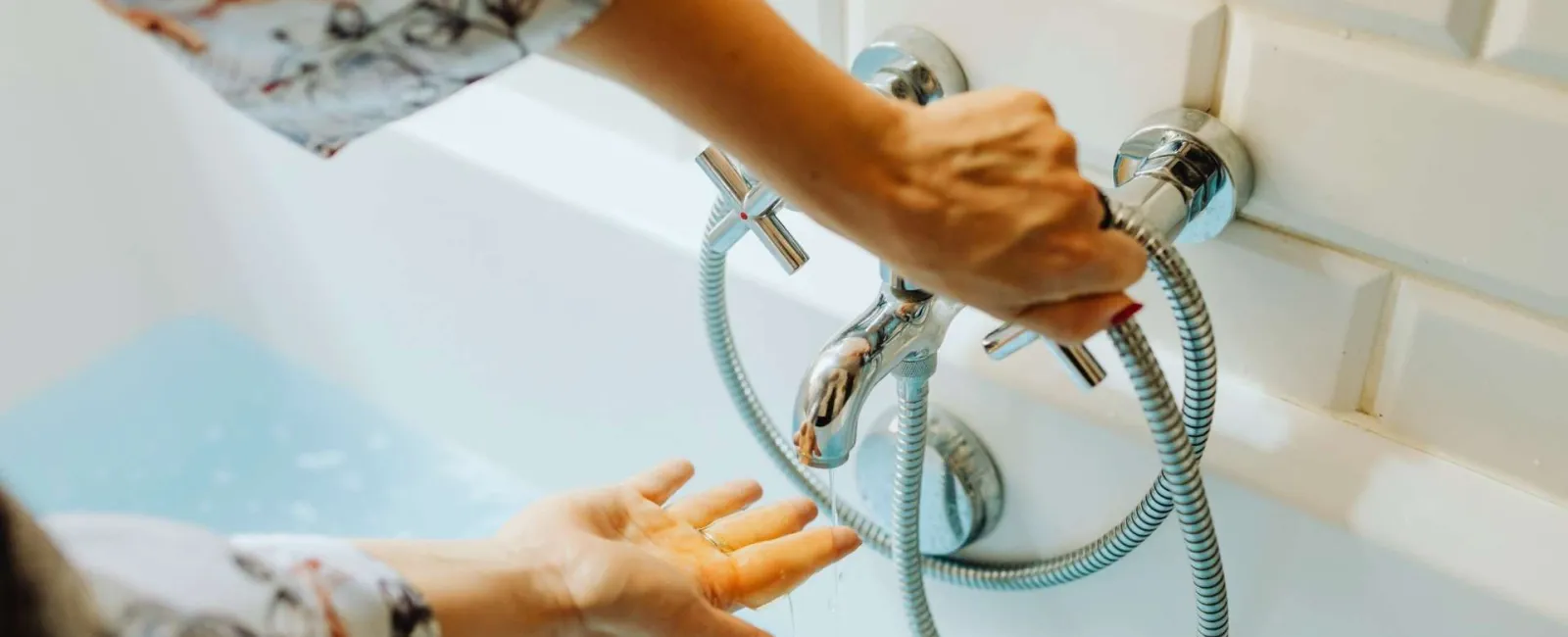
If you turn on your faucet and only cold water comes out, no matter how long you wait or how far you turn the handle toward "hot," while the cold water works perfectly fine, you're experiencing a problem with your hot water supply system rather than your overall plumbing. This specific symptom (cold works, hot doesn't) is actually diagnostic gold: it tells you the issue is with hot-water generation or delivery, not with clogged pipes, broken faucets, or general water-supply problems.
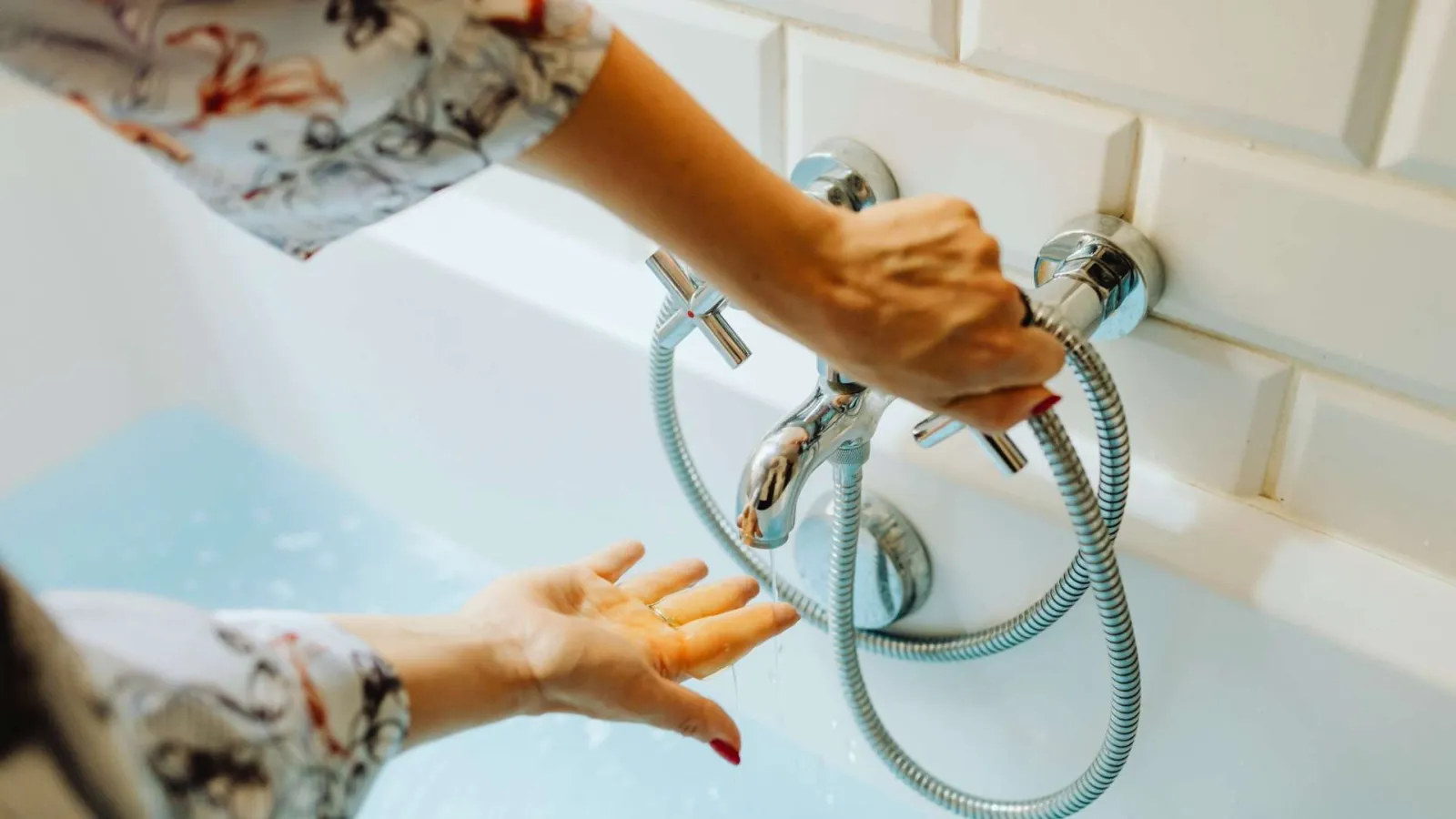
After diagnosing thousands of no-hot-water calls since 1923, our licensed plumbers know that when cold water works but hot water doesn't, most homeowners immediately assume their water heater has completely failed and needs to be replaced. Here's what causes hot water to stop working while cold water continues flowing normally.
Quick Diagnostic Guide: Identify Your Cause
Use this decision tree to quickly narrow down which cause you have:
Question 1: Does ANY fixture in your house have hot water?
- Yes, some fixtures have hot water, but not all → Cartridge failure (Cause #4) or local supply line issue
- No, zero hot water anywhere in the house → Continue to Question 2
Question 2: When did the problem start?
- Suddenly, right after plumbing work or water heater service → Shutoff valve closed (Cause #1)
- Gradually over weeks/months, hot water gets weaker → Sediment buildup (Cause #2)
- Suddenly, for no apparent reason → Continue to Question 3
Question 3: What type of water heater do you have?
- Electric (no gas pipe, no pilot light) → Check circuit breaker (Cause #5)
- Gas (has pilot light, gas pipe, vent) → Check pilot light and gas supply (Cause #6)
- Either type, and hot water runs out much faster than before → Dip tube failure (Cause #3)
Question 4: Have you heard unusual sounds from the water heater?
- Popping, rumbling, or crackling → Sediment buildup (Cause #2)
- No unusual sounds, heater seems to run normally → Shutoff valve or dip tube (Causes #1 or #3)
6 Causes of No Hot Water (When Cold Works) - Ranked by Frequency
Based on hundreds of no-hot-water service calls we've completed, here are the six most common causes, ranked from most to least frequent:
1. Water Heater Shutoff Valve Partially or Fully Closed (35% of Cases)
What's happening: Your water heater's cold-water shutoff valve, the valve on the cold line entering the top of the tank, is partially or fully closed. If cold water can't enter the tank, hot water can't leave it. Your cold water will still work normally because it bypasses the heater entirely. This is the most common cause of "no hot water" right after plumbing work or any activity near the heater.
Why does the valve end up closed?
-
The plumber or the homeowner closed it during maintenance and didn't reopen it fully
-
Someone shut it off during renovations or repairs "just in case"
-
DIY attempt to adjust temperature or pressure
-
Accidental bump while moving storage items
-
Winterization attempt that wasn't reversed
-
Kids turning random valves in utility areas
How to check it:
-
Find the cold inlet pipe at the top/upper side of the heater.
-
Locate the shutoff valve on that pipe.
-
Make sure the valve is fully open, and turn it counterclockwise until it stops.
-
Wait 10-15 minutes for the tank to refill and heat.
-
Test the nearest hot-water faucet.
Important safety note: If the valve is old, stiff, or corroded, do not force it. If it leaks or refuses to turn smoothly, stop and call a plumber; forcing a stuck valve can crack the pipe or break the valve body.
This is one of the simplest fixes for a "no hot water" situation, but also one of the easiest to overlook.
2. Sediment Buildup in Water Heater Tank (30% of Cases)
What's happening: Over time, minerals in the water, mainly calcium and magnesium, settle at the bottom of your water heater and form a sediment layer. In a region with moderately hard water, this buildup can happen within 3-10 years. Once the sediment gets thick enough, it blocks the hot-water outlet, insulates the heat source from the water, or buries the lower heating element (electric units), all of which lead to little or no hot water even though the heater is running.
Why sediment causes no hot water:
-
Outlet blockage: Sediment collects at the dip tube exit, restricting hot water from leaving the tank.
-
Poor heat transfer: A thick sediment layer acts as insulation, preventing the burner or element from effectively heating the water.
-
Element burial (electric): The lower element ends up buried and eventually burns out.
-
Stratified heating: Water above the sediment heats, but can't exit, or cold water bypasses the heated layer entirely.
How to check for sediment:
-
Turn off the power (electric) or set the gas control to Pilot.
-
Let the heater cool for 1-2 hours.
-
Attach a garden hose to the drain valve at the bottom of the tank.
-
Run the hose to a floor drain or outside.
-
Open the drain valve and watch the water:
-
Clear water: little sediment
-
Cloudy, sandy, gritty, or chunky water: heavy sediment buildup
-
Solution:
-
Moderate sediment: A proper flush can restore performance. This means fully draining the tank, flushing until the water runs clear, and refilling.
-
Severe or hardened sediment (common in 10+ year unflushed tanks): The sediment can calcify and won't break loose. At that point, flushing isn't worth it—the cost-effective option is to replace the water heater.
A plumber can evaluate the severity of the buildup, flush it if feasible, or recommend replacement if the tank is too far gone.
3. Failed Dip Tube (20% of Cases)
What's happening: Your water heater's dip tube is a long plastic pipe attached to the cold-water inlet at the top of the tank. Its job is simple but essential: it sends incoming cold water to the bottom of the tank where the burner or elements heat it. If the dip tube cracks, breaks off, or disintegrates, cold water can dump into the top of the tank, the same place where hot water is supposed to exit.
Why dip tubes fail:
-
Age: Plastic weakens from constant hot/cold cycling and usually fails between 8-15 years.
-
Known defect era: Certain 90s-early-2000s dip tubes were notorious for crumbling into tiny white particles.
-
Mineral attack: Hard water gradually erodes the plastic.
-
Thermal stress: Repeated expansion/contraction eventually cracks the tube.
-
Mechanical damage: An installer may have cracked or dislodged it during previous repairs.
DIY test to confirm a bad dip tube: Run hot water from a faucet closest to the heater and check the temperature over time:
-
Hot at first, then drops sharply within 2-5 minutes?
→ A strong sign that the dip tube isn't delivering cold water to the bottom of the tank. -
Temperature stays consistent?
→ Look elsewhere (heating elements, thermostat, sediment, etc.).
Why this test works: A functioning tank heats from the bottom up. A broken dip tube mixes cold water with the hot layer at the top, "diluting" the hot water almost immediately.
The fix:
-
Shutting off water and power/gas
-
Draining part of the tank
-
Disconnecting the cold inlet nipple
-
Pulling the old dip tube
-
Installing a new tube with proper sealing
-
Flushing out any plastic debris left in the tank and lines
It's not technically complicated, but you can easily end up with a leak if the fittings aren't resealed correctly. And if the tube disintegrated, the debris needs to be flushed before it clogs aerators and valves throughout the house.
A pro can handle the swap and flush everything in a single visit.
4. Cartridge Failure in Single-Handle Faucets (10% of Cases)
What's happening: If only one faucet in your home has no hot water while every other fixture works fine, your water heater isn't the issue. The problem is almost always the faucet's internal mixing cartridge. Single-handle faucets rely on this cartridge to blend hot and cold water. When it jams, clogs, or the seals fail, the faucet defaults to "cold only" even though the hot-water line feeding it is perfectly fine.
Most people miss this and assume the water heater died simply because the faucet they're using isn't delivering hot water.
Typical cartridge failures:
-
Stuck in the cold position because minerals have frozen the internal shuttle
-
Hot-side inlet ports clogged with sediment or rust flakes
-
Failed O-rings/seals are causing incorrect mixing
-
Worn internal mechanics after years of use
-
Hard-water scale is limiting the cartridge's range of motion
Quick confirmation test (do this before touching the water heater):
-
Turn on the hot water at a nearby fixture.
-
If that faucet has hot water → the problem is your faucet cartridge.
-
If no faucet has hot water → this isn't a faucet issue; the problem is upstream (heater, dip tube, sediment, etc.).
This single test prevents a lot of wasted time.
The fix: Replace the faucet cartridge. Each brand uses its own design, and Moen cartridges are very different from those of Delta, Kohler, or Pfister, so identifying the model matters.
Replacing it involves:
-
Shutting off the water to the faucet
-
Removing the handle and retaining nut/clip
-
Pulling the old cartridge straight out (they're often stubborn)
-
Installing the new one in the correct orientation
-
Reassembling everything and testing for leaks
DIY-able if you've done it before, but getting the wrong cartridge or damaging the retaining clip happens constantly. A pro will have the exact cartridge on hand, swap it cleanly, and confirm the hot-side flow is restored.
5. Tripped Circuit Breaker or Blown Fuse (Electric Water Heaters Only) (3% of Cases)
What's happening: Electric water heaters run on 240 volts and rely on two heating elements and two thermostats. If the dedicated 30-40-amp breaker trips, the heater loses power instantly. No power = no heating, so the entire house gets cold water even though the tank may stay lukewarm for a short time. This is one of the most common causes of sudden no-hot-water calls.
Why the breaker actually trips (not random):
-
Burned-out heating element — shorts internally and spikes the current
-
Sediment burying the lower element — overheats → element fails electrically
-
Loose or scorched wiring — resistance builds heat until the breaker pops
-
Failed thermostat — stuck "on," overheats the element
-
Ground fault — water leaking onto electrical components
-
Weak/dying breaker — nuisance-trips under normal load
All of these involve high-amperage components. None are "peek inside and guess" situations.
How to check safely:
-
Go to your breaker panel.
-
Find the double-pole breaker labeled Water Heater or WH.
-
If it's in the middle position, it tripped.
-
Turn it fully OFF, then ON again.
-
Wait 1-2 hours to see if the heater recovers.
If it trips again, stop resetting it. That means an actual failure, not a fluke, and repeatedly resetting a tripping breaker is how electrical fires start.
What NOT to do:
-
Don't keep "trying it again."
-
Don't open access panels unless you know how to work on 240-volt circuits.
-
Don't ignore a breaker that trips twice.
A harmless power surge trips once. A failing element, thermostat, or wire trips repeatedly.
The fix:
-
Replace a burned-out element
-
Replace the stuck or failed thermostat
-
Repair or tighten internal wiring
-
Fix leaks causing ground faults
-
Replace the failing breaker (panel issue)
-
Replace the heater if age + multiple failures make repairs pointless
Electric water heater diagnostics involve both plumbing work and live 240-volt circuits, so this is the point where bringing in a pro is the safe move.
6. Gas Supply Issues (Gas Water Heaters Only) (2% of Cases)
What's happening: If your gas water heater suddenly stops delivering hot water but your cold water works fine, the heater probably isn't getting gas. A gas heater can't heat anything unless the pilot and burner have a steady supply of fuel. When the gas shutoff valve is partially or fully closed, or the supply is interrupted, you end up with a tank of cold water even though nothing "inside" the heater has actually failed.
Typical gas-supply failures:
-
The shutoff valve on the gas line is partially closed
-
The pilot went out after a draft or brief interruption
-
Propane tank empty (for propane homes)
-
Utility doing maintenance in your area
-
Internal gas control valve not opening fully
-
Minor line damage restricting flow
Quick confirmation test: Look through the pilot window. No blue flame = no gas reaching the pilot, or the pilot went out.
Then test another gas appliance (stove, furnace):
-
If THEY also don't light → you have a gas-supply issue, not a water heater issue.
-
If THEY work fine → the problem is isolated to your heater or its shutoff valve.
Check the shutoff valve next. It should be parallel to the gas pipe (fully open), not perpendicular.
Safety note (short and necessary): If you smell gas, stop. Don't relight anything. Leave the area and call your gas utility.
The fix: If the gas valve was partially closed, opening it restores flow immediately. If the pilot is out, follow the relight procedure on the heater's label. If the pilot lights but won't stay lit, you've moved into thermocouple or gas-valve territory, not a gas-supply issue, and that requires a different repair path.
The Bottom Line on No Hot Water (Cold Works Fine)
If you've got no hot water anywhere in the house, but cold water works normally, the two most common causes are a partially or fully closed water heater shutoff valve (about 35% of cases) or heavy sediment buildup inside the tank (about 30% of cases). For electric water heaters, a tripped double-pole breaker instantly shuts down all heating, so the electrical panel should be checked first. For gas heaters, the pilot must be lit and the gas shutoff valve fully open; otherwise, the burner won't fire.
Always start with the quick checks that solve about half of all no-hot-water calls: make sure the water heater shutoff valve is fully open, confirm the breaker isn't tripped (electric) or the pilot isn't out (gas), and test multiple fixtures to determine whether the issue is whole-house or single-fixture. These steps take less than 10 minutes and eliminate the most common causes right away.
If you still have no hot water, you're likely dealing with sediment blockage, a failed dip tube, electrical component failure, or a gas-supply issue, all of which need proper diagnosis. Our licensed plumbers handle everything from simple valve resets to full water heater repairs and replacements across Cumming, Alpharetta, Roswell, and North Metro Atlanta.


