
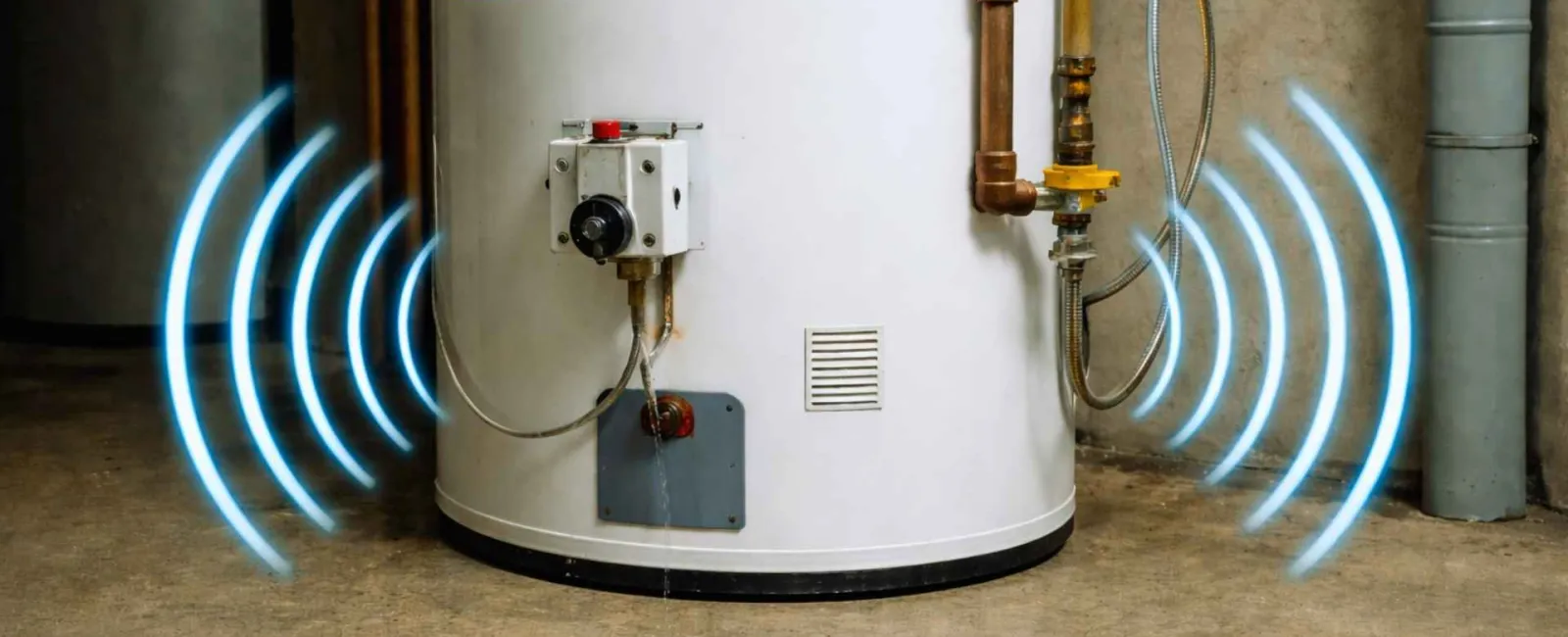
When a water heater makes popping, hissing, banging, rumbling, or screeching noises, it's signaling a specific problem inside the tank. These sounds are not harmless background noise. They can indicate anything from mineral sediment buildup that needs routine maintenance to dangerous pressure conditions that increase the risk of tank failure or explosion. The type of noise tells you what's wrong and how urgently it needs to be addressed.
After responding to water heater noise calls since 1923, our licensed plumbers have identified six common sounds and the problems behind them. Below, we explain what each sound means, the risks involved, and whether you need emergency repair or routine maintenance.
Understanding Water Heater Sounds: The Warning System
Water heaters operate under high pressure (about 50-60 PSI) and extreme heat (typically 120-140°F), heating 40-80 gallons of water around the clock. As water heats, minerals settle at the bottom of the tank as sediment, pressure rises and falls, and gas burners cycle on and off. These normal processes create sound, and the specific noise tells you what's happening inside a sealed tank you can't see.
The key difference is volume and persistence. Normal sounds, such as brief whooshing, soft burner ignition, or gentle water movement, are subtle and short-lived. Abnormal sounds: loud popping, constant hissing, metallic banging, or rumbling that shakes the floor are persistent, travel through the home, and signal problems that will only get worse. If the noise is loud enough that you're searching for this, it's not normal and needs a professional diagnosis.
6 Water Heater Sounds - What They Mean & Risk Levels
1. Popping or Crackling Sounds (35% of Cases) - Risk Level: Low to Moderate
What you hear: Rhythmic popping, crackling, or small explosive sounds during heating cycles. Often compared to popcorn popping or Rice Krispies. The noise may stop once the water reaches temperature.
What's causing it: Mineral sediment (calcium, magnesium, lime) has built up on the bottom of the tank. When the burner or heating element turns on, water trapped beneath the sediment overheats and flashes into steam, forcing bubbles through the hardened layer and creating popping sounds. This is the most common water heater noise, especially in homes with hard water, and typically develops after 2-5 years.
Why this happens: Heated water causes dissolved minerals to precipitate out of solution and settle to the bottom of the tank. Over time, these minerals form a thick sediment layer that insulates the tank floor, creates hot spots, and makes the heater work harder.
The risks:
-
Reduced efficiency: Sediment insulation can waste 15-30% more energy
-
Shortened tank life: Hot spots damage the tank's protective lining and accelerate corrosion
-
Component failure: Overheating can burn out heating elements or damage gas burners
-
Future leaks: Long-term neglect can lead to tank failure
What to do: Schedule a water heater flush to remove sediment. This involves fully draining the tank and flushing debris through the drain valve. Heavy buildup (especially if the tank hasn't been flushed in 5+ years) may require professional equipment. After flushing, annual maintenance helps prevent recurrence.
Timeframe: Schedule service within 1-2 weeks. Not an emergency unless accompanied by leaks, no hot water, or other symptoms.
2. Hissing Sounds (25% of Cases) - Risk Level: HIGH - URGENT
What you hear: Continuous or intermittent hissing, similar to air escaping from a tire or steam venting from a radiator. You may see water or steam discharging from the temperature and pressure (T&P) relief valve on the side or top of the tank. Unlike popping, the sound is steady while present.
What's causing it: The T&P relief valve is releasing pressure because water temperature has exceeded 210°F or pressure has exceeded 150 PSI. This valve is a critical safety device designed to prevent tank explosions. If it's hissing, it's doing its job, but the conditions triggering it are dangerous and require immediate attention.
Why this happens:
-
Thermostat set too high: Temperatures above 140°F increase pressure
-
Failed thermostat: Burner or heating element doesn't shut off
-
Thermal expansion: Heated water expands in closed plumbing systems without an expansion tank
-
Defective T&P valve: Mineral buildup or age causes partial opening (less common)
The risks:
-
Explosion hazard: If the valve fails under extreme pressure or heat, the tank can explode
-
Severe burns: Water over 210°F can cause third-degree burns instantly
-
Flooding: Discharge can release several gallons per minute
-
Property damage: Steam and hot water can damage nearby areas
What to do immediately: Do not cap or disable the T&P valve; it's preventing an explosion. Turn off the power (electric) or gas supply immediately, then shut off the cold water supply to the tank. Contact an emergency plumber right away. This is a same-day emergency that requires professional diagnosis to identify the cause and restore safe operation.
Timeframe: EMERGENCY, same-day service required. Do not use hot water or restart the heater until it has been professionally inspected.
3. Rumbling or Kettling Sounds (20% of Cases) - Risk Level: Moderate
What you hear: Deep rumbling, rolling, or boiling sounds, similar to a kettle on the stove. The tank may vibrate enough to feel when touched. Noise is continuous during heating cycles, louder than popping but lower-pitched than hissing.
What's causing it: Severe mineral sediment buildup. The sediment layer has grown thick and compacted, trapping water beneath it. When the burner or heating element activates, this trapped water boils violently, creating turbulent churning and vibration inside the tank.
Why this happens: Rumbling develops after years of neglected maintenance, typically 5-10+ years without flushing in hard-water areas. Over time, sediment hardens and insulates the tank bottom, causing extreme localized overheating and continuous boiling.
The risks:
-
Imminent tank failure: Often indicates the tank is in its final 1-3 years
-
Glass lining damage: Extreme heat cracks the protective lining, exposing steel
-
Rapid corrosion: Once exposed, leaks can develop within 6-18 months
-
Heating element failure: Sediment-embedded elements overheat and burn out
-
Severe energy loss: Can increase energy use by 30-50%
What to do: Schedule a professional inspection within one week. A plumber may attempt flushing, but heavily sedimented tanks often cannot be fully cleared. If flushing produces rust-colored water or little sediment removal, replacement is usually more cost-effective than repair. If flushing is successful, establish a regular flushing schedule to slow further damage.
Timeframe: Schedule service within 1 week. Not an immediate emergency, but a strong sign of advanced deterioration.
4. Banging or Hammering Sounds (12% of Cases) - Risk Level: Moderate
What you hear: Sudden loud bangs, metallic knocking, or hammer-like sounds when a faucet, washing machine, or dishwasher shuts off. The noise occurs when water stops flowing, not when it starts.
What's causing it: This is water hammer, a pressure shockwave created when fast-moving water is abruptly stopped by a closing valve. Quick-closing valves (especially modern appliance solenoids) cause the water's momentum to slam through the pipes, making them bang against framing, fittings, or the water heater itself. While the noise is not caused by the water heater, the tank and its connections often amplify it.
Why this happens:
-
High water pressure: Pressure above 80 PSI increases hammer severity
-
Missing or failed arrestors: Water hammer arrestors can be absent or waterlogged
-
Loose pipes: Unsecured pipes vibrate and magnify the impact
-
Fast-closing valves: Modern appliances close valves almost instantly
The risks:
-
Pipe joint failure: Repeated shock can loosen or crack connections
-
Water heater leaks: Stress can damage the inlet and outlet fittings
-
Fixture damage: Valves in toilets, faucets, and appliances can fail
-
Extreme pressure spikes: Hammer can briefly exceed 200 PSI
What to do: Check your water pressure with a gauge (ideal range: 40-60 PSI). If pressure exceeds 80 PSI, a pressure-reducing valve is needed. A plumber can also install or replace water hammer arrestors and secure loose pipes. If hammering starts suddenly, existing arrestors may be waterlogged and need replacement.
Timeframe: Schedule service within 2-4 weeks. Not an emergency unless new leaks appear.
5. High-Pitched Whistling or Screeching (5% of Cases) - Risk Level: Moderate to High
What you hear: Loud whistling, screeching, or tea-kettle-like noise. High-pitched and often uncomfortable to listen to. May occur continuously or only during hot water use.
What's causing it: Water is being forced through a partially closed or restricted valve, creating turbulence and vibration. The most common sources are a partially closed water heater inlet valve, a failing temperature and pressure (T&P) relief valve stuck partially open, or a restricted pressure-reducing valve elsewhere in the plumbing system.
Why this happens: Sediment, corrosion, or improper valve position can restrict water flow. When pressurized water is forced through a narrow opening, it accelerates and vibrates, producing a high-frequency noise.
The risks:
-
Reduced hot water flow: Restriction limits heater output
-
T&P valve failure risk: A whistling T&P valve may not relieve pressure properly
-
Valve damage: Turbulence accelerates wear and corrosion
-
Pressure imbalance: Partial inlet closure can create uneven heating and pressure
What to do: Identify the source of the noise. Check that the cold water inlet valve above the tank is fully open. Inspect the T&P valve for signs of partial discharge and listen to determine whether the sound is coming from the heater or nearby piping. If the T&P valve is whistling, it should be replaced immediately by a licensed plumber. Never cap, disable, or modify the T&P valve; it's a critical safety device.
Timeframe: Schedule service within 1 week if the T&P valve is involved; 2-3 weeks if another valve is the cause.
6. Humming or Vibrating Sounds (3% of Cases) - Risk Level: Low
What you hear: A steady humming, buzzing, or vibrating sound during heating cycles. The tank may vibrate slightly. The noise stops when the heating element turns off.
What's causing it: Electric heating elements naturally create minor vibration, but audible humming means a problem. The most common causes are a loose heating element, mineral scale buildup on the element, or vibrating electrical connections.
Why this happens: Mineral scale builds up on heating elements over time, causing uneven heating and vibration. Repeated heating and cooling also cause elements and mounting hardware to loosen, allowing them to move against the tank or scale deposits.
The risks:
-
Heating element failure: Vibration shortens element lifespan
-
Reduced efficiency: Scale-covered elements waste energy
-
Gasket leaks: Movement can loosen the element seal
-
Electrical hazards: Loose connections can overheat or arc
What to do: Turn off the power to the water heater at the breaker. The heating element should be inspected and properly tightened using the correct tools. If humming continues, the element likely needs replacement due to scale buildup. Because electric water heaters operate on 240 volts, element inspection or replacement should be handled by a professional if you're not experienced with high-voltage electrical work.
Timeframe: Schedule service within 2-4 weeks, or sooner if hot water output is declining.
When to Call Emergency Plumbing Service Immediately
Continuous hissing from the T&P valve with steam or water discharge — indicates dangerous pressure conditions requiring same-day service
-
No hot water combined with unusual noises — may signal thermostat failure or heating element burnout creating unsafe conditions
-
Water pooling at the base with any noise — indicates an active leak that can worsen rapidly
-
Strong gas smell with any noise (gas heaters) — evacuate immediately, call the gas company, then a plumber
-
Multiple noises at once (hissing + rumbling, banging + popping) — indicates multiple failing components
-
Sudden noises that are rapidly getting louder — signals accelerating failure
-
Noise combined with rusty hot water — indicates internal corrosion and potential tank failure within week
If a noise falls into the emergency categories above, don't wait, continued operation increases the risk of flooding, burns, or catastrophic tank failure.
Prevention: Keeping Your Water Heater Quiet
Prevent most water heater noises with regular maintenance:
- Annual flushing - Drain 2-3 gallons monthly or completely flush annually to remove sediment before it hardens. This single maintenance task prevents 80% of water heater noise issues.
- Anode rod inspection every 3-4 years - The sacrificial anode rod protects your tank from corrosion. When it depletes (typically 5-8 years), corrosion accelerates and sediment increases. Replacing the anode rod extends tank life 5-10 years.
- Temperature setting at 120-130°F - Higher temperatures accelerate mineral precipitation and sediment formation. 120°F provides sufficient hot water for most households while minimizing sediment.
- Pressure testing annually - Verify water pressure stays between 40-60 PSI. High pressure (80+ PSI) increases sediment formation, accelerates wear, and increases hammer risk.
- T&P valve testing annually - Lift the T&P valve test lever once per year to ensure it operates freely. A stuck T&P valve won't protect against dangerous pressure.
The Bottom Line on Water Heater Noises
Water heater noises are diagnostic signals that point to specific problems and timelines. After 100 years of service, we know what sounds mean what: Popping indicates sediment buildup and the need for flushing; Hissing signals dangerous pressure and requires same-day emergency service; Rumbling means severe sediment and possible tank failure; Banging points to water hammer that needs correction; Whistling indicates a restricted valve; Humming suggests issues with the electric heating element.
The key distinction is urgency. Hissing is an emergency because it indicates unsafe pressure conditions that can lead to a tank explosion. Other noises are not immediately dangerous but will worsen if ignored, leading to higher energy bills, reduced hot water, accelerated wear, and premature tank replacement.
If your water heater is making popping, hissing, rumbling, banging, whistling, or humming noises, contact our licensed plumbers for professional diagnosis and repair in Cumming, Alpharetta, Roswell, and North Metro Atlanta. We offer same-day emergency service for pressure issues, routine maintenance like tank flushing and anode replacement, and full water heater replacement when repair is no longer cost-effective.


