
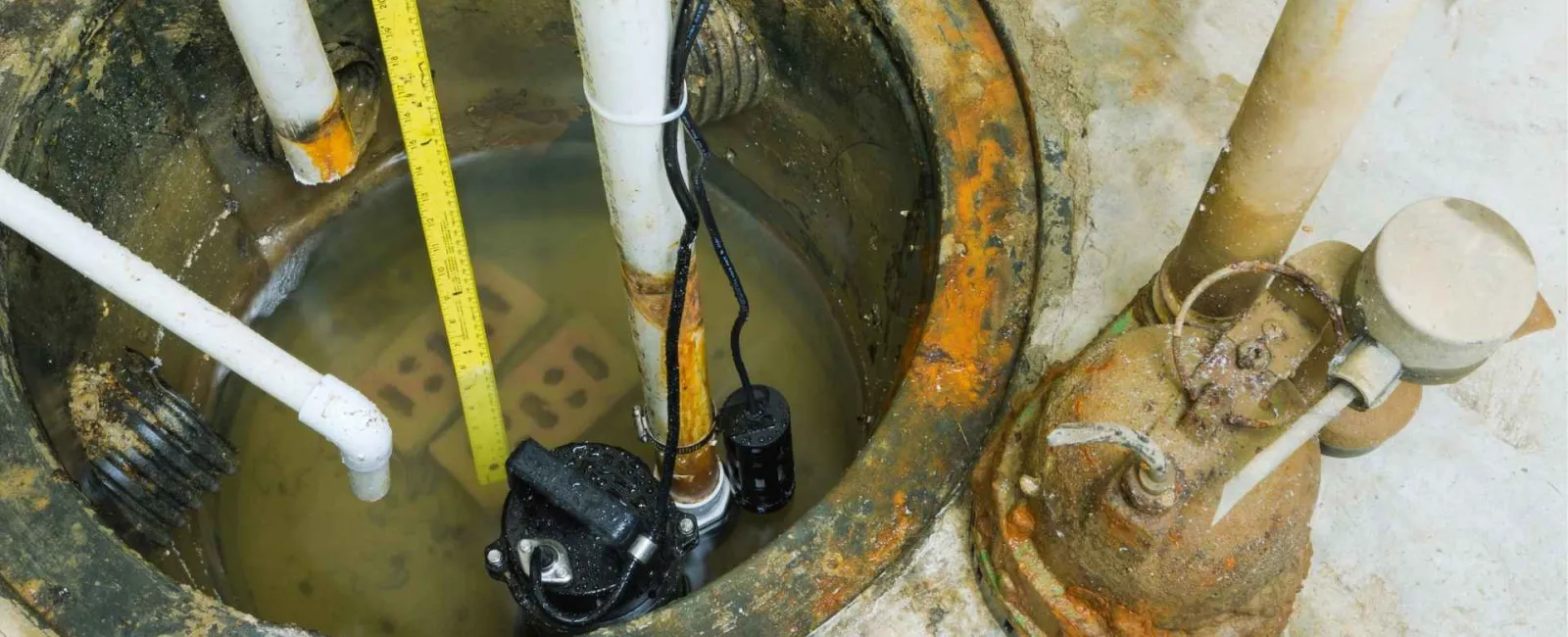
When a sump pump fails during heavy rain or snowmelt, right when it's needed most, the risk of basement flooding rises fast. Groundwater can enter at rates of 10-30 gallons per minute in severe weather, overwhelming drains and soaking carpets, drywall, storage, and even structural components before the problem is obvious.
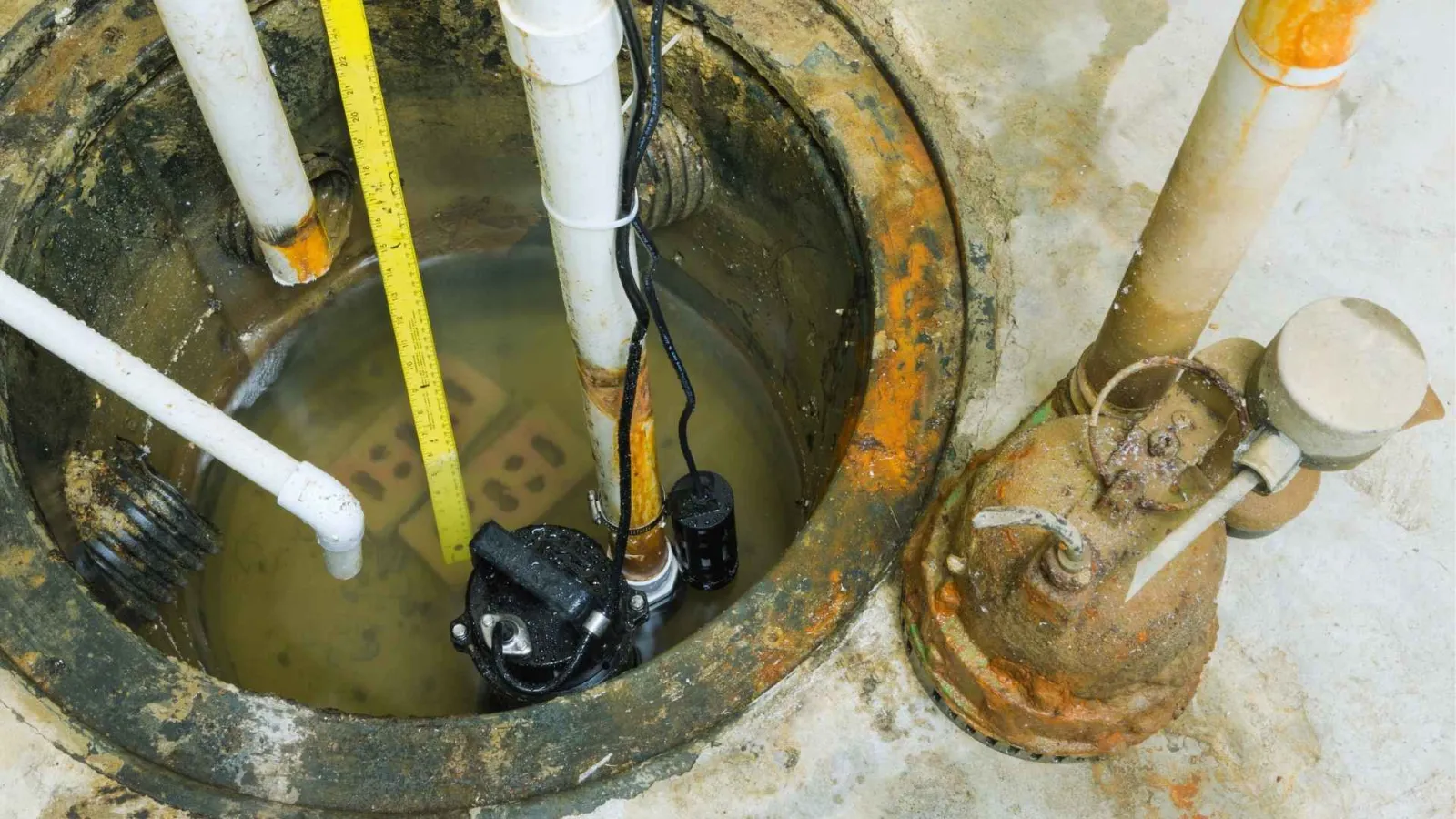
After responding to hundreds of emergencies since 1923, our licensed plumbers have identified five primary causes of pump failure, each requiring different troubleshooting steps. The encouraging part: roughly 60% stem from simple issues such as tripped breakers, unplugged cords, or stuck float switches that can often be corrected in 15-30 minutes. The remaining cases involve mechanical problems such as failed motors, damaged impellers, or bad check valves, which usually require replacement.
Here's what to check first, how to pinpoint the failure, and when to call emergency services to prevent serious water damage.
IMMEDIATE Emergency Steps (Do This First)
Before diagnosing why your pump failed, take these critical steps to minimize water damage:
1. Check the water level in your sump pit immediately. If water is rising dangerously close to the pit rim (within 6-8 inches), you have minutes to hours before overflow. If the pit is already overflowing, you're in an active flooding emergency.
2. Remove valuable items from your basement floor if water hasn't reached them yet. Prioritize electronics, important documents, furniture, and anything you cannot afford to lose.
3. Turn off the basement power at the circuit breaker if standing water is present or approaching electrical outlets—electrocution is a serious risk when water contacts energized circuits.
4. Contact our emergency plumbing service immediately if: The sump pit is overflowing, you have standing water in your basement, heavy rain continues with no pump function, you cannot identify the problem after checking the items below, or your pump is making unusual noises but not removing water.
Once you've addressed immediate safety and contacted professional help if needed, proceed with the diagnostic steps below to identify the specific failure cause.
5 Reasons Your Sump Pump Stopped Working
1. Power Failure or Electrical Issues (40% of Cases)
What's happening: The sump pump isn't receiving electricity. A tripped breaker, unplugged cord, blown fuse, or tripped GFCI outlet is the most common reason pumps stop working, and it's often missed because people assume the unit itself has failed instead of checking the power source first.
How to identify this cause:
-
The pump is completely silent when the float is lifted; no hum, click, or motor noise
-
No indicator lights appear on the pump or control panel
-
Other outlets or fixtures on the same circuit aren't working
-
The unit was recently unplugged for cleaning or maintenance
-
The failure happened during a storm, outage, or lightning event
Why this happens: Breakers trip when motors draw too much current, circuits are overloaded, or protective devices detect moisture. Plugs can loosen if bumped, and severe weather often brings power interruptions right when the pump is needed most.
What to do:
-
Check the cord: Follow it to the outlet and confirm it's fully inserted with no visible damage. If it's a GFCI, press reset.
-
Check the breaker: Find the sump pump circuit in the panel. If it's tripped, switch it fully off and then back on. If it trips again, stop—there's likely an electrical or motor issue that needs professional service.
-
Try another outlet: Use a properly rated extension cord. If the pump runs, the original circuit may have failed.
-
Confirm utility power: If the house is without electricity, the pump can't operate until service returns. Homes in flood-risk areas should have a battery backup system for this reason.
2. Stuck or Malfunctioning Float Switch (25% of Cases)
What's happening: The float switch, the device that tells the sump pump when to turn on as water rises, is stuck, obstructed, or has failed. Even though the pit fills, the pump never receives the signal to activate. This is one of the most common problems and usually happens when debris or tight clearances restrict float movement.
How to identify this cause:
-
The pump has power and runs if you lift the float manually, but it won't start on its own
-
The float is wedged against the pit wall, tangled on the discharge pipe, or caught on debris
-
The float doesn't move freely when raised and lowered
-
The pump shuts off as soon as you release the float, even with high water levels
-
Gravel, sticks, or other objects are visible in the pit
Why this happens: Vertical floats can jam if the pump shifts or the pit is narrow. Tethered (ball-style) floats may wrap around piping or the pump housing. In other cases, internal electrical contacts wear out, or mineral buildup causes the mechanism to stick even when it appears to move.
What to do:
-
Check movement: Lift and lower the float by hand. It should travel smoothly without rubbing or catching.
-
Remove debris: Clear anything in the pit that could block its path. Aim for several inches of open space around the float.
-
Reposition the pump: If the float hits the wall, move the pump closer to the center of the pit.
-
Test activation: With power on, raise the float. The pump should start within a couple of seconds. If it doesn't, or responds inconsistently, the switch likely needs replacement.
-
Free tethered cables: Make sure the float's cord can swing through its full range without snagging.
If the switch has failed internally, replacement is the fix. A licensed plumber can install a new float assembly and confirm the system cycles automatically and reliably.
3. Jammed or Burned-Out Pump Motor (20% of Cases)
What's happening: The pump motor has seized because the impeller is jammed, or the motor has burned out from age, overheating, or running dry. When you lift the float, you might hear a hum or buzz with no water movement, or nothing at all if the motor has failed completely.
How to identify this cause:
-
The pump hums or buzzes but doesn't discharge water → likely a jammed impeller
-
The pump is silent even though power is confirmed → likely motor failure
-
A burning electrical odor is present near the unit
-
The pump ran for hours during heavy rain before stopping
-
The unit is 7-10+ years old
-
Debris such as gravel, sticks, or small objects is visible near the intake
Why this happens: Impellers lock up when debris wedges between the spinning component and the housing. Even small stones or mineral buildup can stop rotation. Motors fail due to long run times, overheating, insufficient cooling water, worn bearings, or electrical stress. Running dry for as little as 15-30 minutes can permanently damage the motor.
What to do:
-
Listen carefully: A humming motor means it has power but can't spin. Silence usually means the motor is dead (assuming electrical supply has already been verified).
-
Try freeing the impeller: Unplug the pump. If the design allows access, gently attempt to rotate the impeller using a screwdriver through the intake screen. Don't force it; excess pressure can ruin the shaft or seals.
-
Check for burnt smell: If present, replacement is required.
-
Retest: Restore power and lift the float. If the pump still won't move water, the internal components have likely failed.
Burned-out motors and badly damaged impellers mean replacement. These pumps are sealed, and repair is rarely economical. During active high-water conditions, emergency plumbers can provide same-day replacements to quickly restore protection.
4. Clogged or Frozen Discharge Line (10% of Cases)
What's happening: The discharge line, the pipe that carries water away from the foundation, is blocked by ice, debris, or pipe damage. The pump runs, but water can't leave the line, so it flows back into the pit. As a result, the unit may cycle repeatedly without lowering the water level.
How to identify this cause:
-
The motor sounds normal, but the water level barely drops
-
The issue started during freezing weather
-
Ice is visible at the pipe's outdoor termination point
-
The pump runs much longer than usual before shutting off
-
Water trickles or spits from the pipe instead of flowing in a steady stream
Why this happens: In cold conditions, leftover water in the pipe can freeze and create a plug, especially if the line doesn't drain properly after each cycle. Exterior openings can also become blocked by leaves or animals. Underground sections may sag, collapse, or become crushed over time.
What to do:
-
Trace the line: Follow the pipe from the pump to the outside and look for kinks, low spots, or frozen areas.
-
Inspect the outlet: Clear ice, leaves, or other debris from the opening.
-
Thaw carefully: Use hot (not boiling) water, a hair dryer, or approved heat tape. Never use an open flame; plastic piping can deform quickly.
-
Retest the system: Add water to the pit. A healthy discharge should be strong, and the level should fall within about a minute.
-
Reduce future risk: Improve slope so water drains after each cycle, add freeze protection at the outlet, or install heat tape on exposed sections.
If the line is damaged underground or continues backing up after clearing, specialized equipment is needed to locate and repair the restriction.
5. Check Valve Failure (5% of Cases)
What's happening: The check valve, a one-way fitting in the discharge pipe that stops water from flowing back into the pit, has worn out or become stuck. If it fails closed, the pump can't push water through and may run continuously. If it fails open, the discharged water returns to the pit, forcing the pump to turn on repeatedly.
How to identify this cause:
-
You hear water rush back into the pit immediately after the pump shuts off → valve likely stuck open
-
The pump turns on every 30-60 seconds because the pit refills from backflow
-
The pump runs, but the water level barely drops and the discharge line feels tight or pressurized → valve may be stuck closed
-
The pump had been cycling more frequently than normal before failure
-
The valve is more than five years old
Why this happens: Inside the valve is a flapper or spring mechanism designed for one-way flow. Over time, debris, mineral buildup, or simple wear can prevent it from seating or opening properly. A closed valve blocks discharge. An open valve creates short cycling, which can overwork and eventually destroy the motor.
What to do:
-
Find the valve: It's usually 6-12 inches above the pump on the vertical discharge pipe and marked with a flow arrow.
-
Listen after shutdown: If water falls back into the pit, the valve isn't sealing.
-
Confirm restriction: If you suspect it's stuck closed, temporarily removing it for testing can verify the diagnosis. If the pump moves water with the valve out, you've found the problem.
-
Install a new one: These fittings aren't repairable. Replace it and make sure the arrow points away from the pump.
If cycling has been happening for a while, the motor may already be stressed; having the system checked can prevent another failure soon after.
When to Call Emergency Plumbing Service
Contact our licensed plumbers for emergency sump pump service if:
- Your sump pit is overflowing or about to overflow—you need immediate pump replacement or supplemental pumping to prevent flooding
- You have standing water in your basement—indicates the pump has been non-functional for hours and flooding has begun
- Heavy rain or snow melt continues with no pump function—water accumulation will accelerate and overwhelm your basement within hours
- You've checked all five causes above and cannot identify the problem—professional diagnosis is needed
- The pump is making loud grinding, screeching, or rattling noises—indicates imminent mechanical failure
- Your circuit breaker trips repeatedly when you reset it—indicates electrical short circuit or motor failure requiring professional repair
- You need a permanent solution like backup pump installation—prevents future flooding from power outages or primary pump failure
After 100+ years serving North Metro Atlanta, we've found that 40% of sump pump failures result from power issues (tripped breakers, unplugged cords, power outages), 25% from stuck float switches, 20% from jammed or burned-out motors, 10% from clogged discharge lines, and 5% from failed check valves. Professional diagnosis typically takes 15-30 minutes and often identifies issues that aren't apparent to homeowners, preventing misdiagnosis and unnecessary pump replacement.
Preventing Future Sump Pump Failures
Reduce the risk of pump failure with regular maintenance:
Test monthly: Pour a bucket of water into the sump pit to verify the pump activates and discharges properly. This takes 2 minutes and confirms the pump is ready for the next storm.
Clean the pit annually: Remove debris, sediment, and mineral deposits from the sump pit and pump intake screen. This prevents impeller jamming and float interference.
The Bottom Line on Sump Pump Failures
When a sump pump quits, begin with the fastest checks: confirm electrical supply (breaker and plug), lift the float to see if the switch responds, and listen to the motor. A hum usually indicates a jam; silence often indicates a power or motor problem. These quick steps uncover the vast majority of failures and take only minutes. If power is present, the float moves freely, and the motor sounds normal but water isn't leaving the pit, shift your focus to the discharge line or the check valve.
The difference maker is timing. If rain is falling, storms are approaching, the pit is rising, or water has reached the basement floor, the situation is urgent and delays can become expensive fast. When conditions are dry, you typically have time to investigate and plan a standard repair rather than rushing.
Sump pump failure during active weather demands immediate service. Our licensed emergency plumbers are available 24/7 for rapid replacement, water removal, and battery backup installation to restore protection and reduce the risk of another outage. Most replacements are completed within a couple of hours.


