
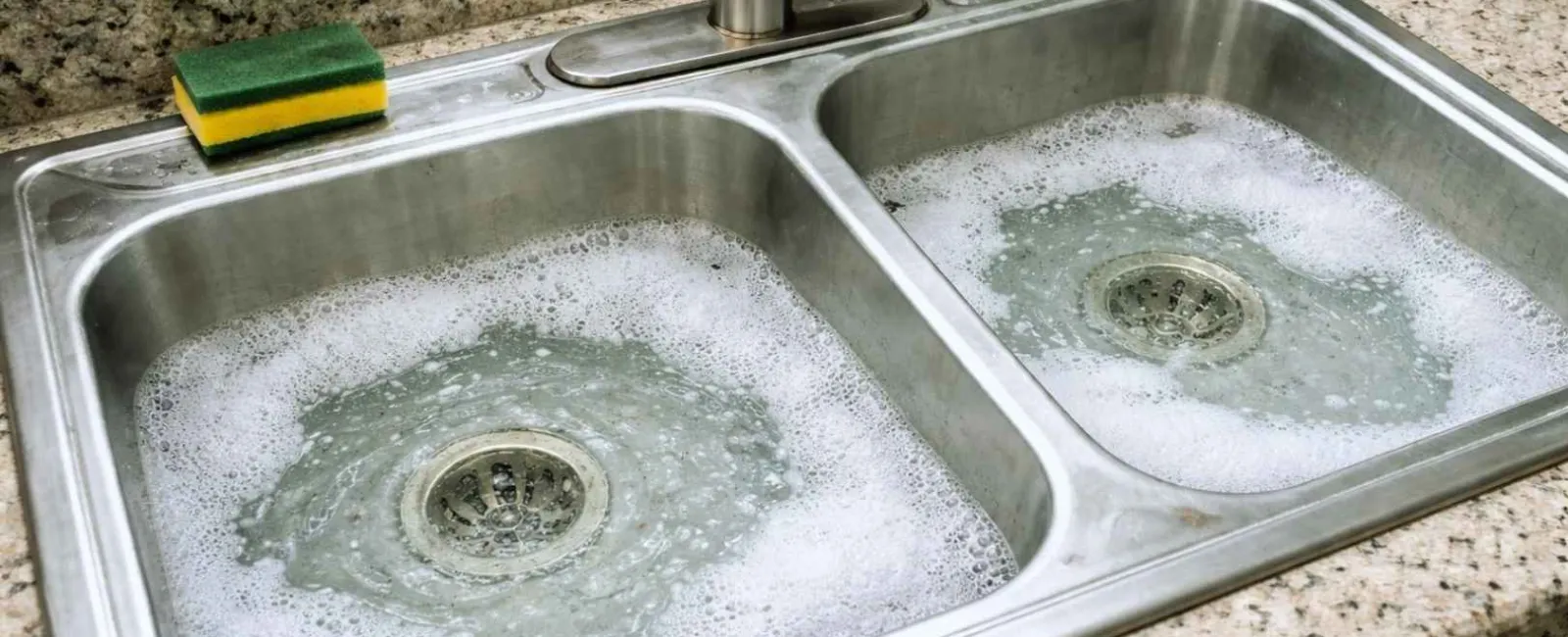
When both sides of your double kitchen sink fill with standing water, even the side without the garbage disposal, it's a classic sign of a shared drain clog. While it seems logical that one basin should still drain if the other is blocked, double sinks don't work that way. Both basins connect to a single drainage system before entering your home's main drain line, so when a blockage forms downstream, water backs up into both sides at the same time, leaving the sink unusable.
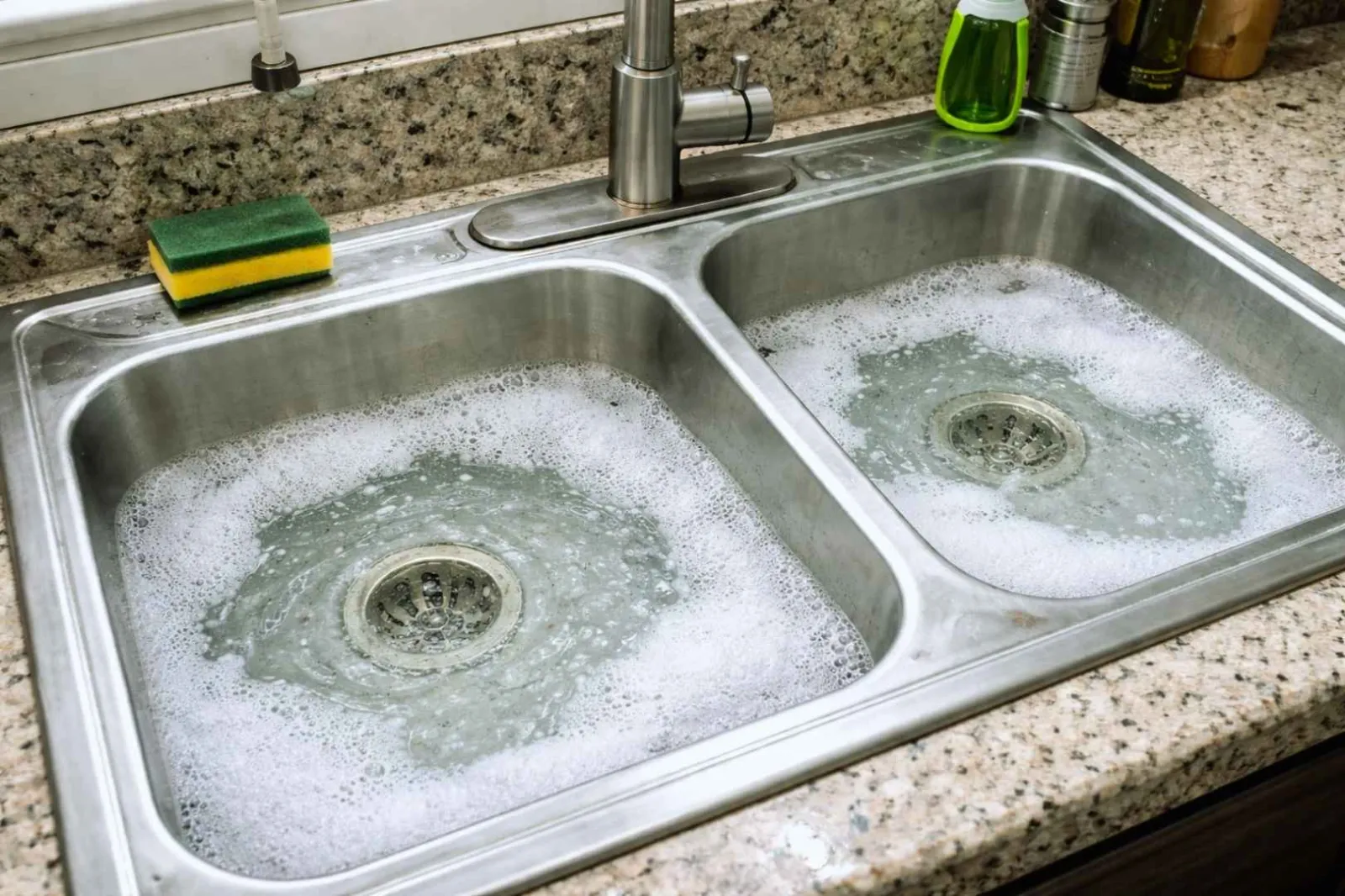
After diagnosing hundreds of double sink clogs since 1923, our licensed plumbers have found that when both sides back up simultaneously, the clog is never in the individual basin drains. It's always located in the shared plumbing where both sides merge. The good news is that most double-sink clogs can be cleared in 30-60 minutes if you understand how the shared plumbing system works. Here's what's happening:
Understanding Your Double Sink Plumbing System
Before attempting any fix, you need to understand why both sides of a double kitchen sink back up at the same time. Although your sink has two basins, the plumbing underneath functions as a single, connected drainage system.
The drainage path: Water from the disposal side exits through the disposal outlet → flows into the disposal discharge pipe → and connects to a horizontal pipe or T-fitting. Water from the non-disposal side drains through the basket strainer → into a tailpiece pipe → and connects to the same horizontal pipe or T-fitting. From that shared connection point, water from both basins flows together through a single P-trap (the U-shaped pipe that holds water to block sewer gas) → then through a horizontal drain pipe → and finally into your home's main kitchen drain line.
The critical insight: Once water from both basins merges at the T-fitting or horizontal connector, they share the same drainage path. If a clog forms in the shared P-trap, the horizontal drain pipe, or the connection to the main drain line, neither basin can drain past it. As a result, water backs up into both sides. This is why running water in the "good" basin causes backup in the "clogged" one; they're draining through the same pipe downstream of the merge point.
5 Causes of Both Sides Clogging (And Where to Look)
1. Shared P-Trap Clog (60% of Cases)
What's happening: The shared P-trap beneath your double kitchen sink has become fully blocked with grease, food particles, soap scum, and debris. Because all drain water from both basins passes through this single trap, it's the most common cause of double-sided sink clogs. The P-trap is typically the lowest point in the drain system and is located inside the cabinet under your sink, making it a natural collection point for buildup over time.
How to identify this cause:
-
Both sides fill with water at the same time when you run either faucet
-
The problem developed gradually, with drains getting slower over weeks or months
-
Grease or food particles are visible in the standing water
-
Recent cooking involved pouring grease down the drain or heavy garbage disposal use
-
No other drains in the home are slow, only the kitchen sink
Solution: Place a bucket under the P-trap to catch standing water. Loosen the slip nuts on both ends of the trap by turning them counterclockwise (use pliers or channel locks if they won't loosen by hand). Remove the P-trap and empty its contents into the bucket. Scrub the inside using a bottle brush or old toothbrush to remove grease and debris, then rinse thoroughly with hot water. Inspect the trap for cracks or corrosion and replace it if damaged. Reinstall the P-trap by tightening the slip nuts hand-tight, then add a quarter turn with pliers; over-tightening can crack plastic fittings. Run water to test for leaks.
If you're uncomfortable disassembling plumbing, or if the P-trap is old or corroded, our licensed plumbers can quickly remove, clean, and reinstall the trap, or replace it if necessary.
2. Garbage Disposal Clog or Connection Issue (25% of Cases)
What's happening: Food waste, grease, or fibrous materials are clogging inside the garbage disposal or in the disposal's discharge pipe, where it connects to the shared drain. Although the blockage starts on the disposal side, it affects both basins because the disposal outlet feeds into the same drainage path. In some cases, a loose or poorly angled discharge pipe can create a partial obstruction, causing water to back up into both sides of the sink.
How to identify this cause:
-
The disposal side backs up first or more severely, then water spills into the other basin
-
Problematic items were recently put down the disposal (grease, pasta, rice, potato peels, fibrous vegetables, coffee grounds, eggshells)
-
The disposal hums without grinding or makes unusual noises
-
Water drains while the disposal is running, but backs up once it's turned off
-
Food odors come from both sides of the sink
Solution: Start by checking for a jam in the disposal. Turn the unit off, look inside with a flashlight, and remove any visible objects using tongs, never your hands. Press the red reset button on the bottom of the disposal. Run the disposal with cold water. If it spins normally but water still backs up, the clog is likely in the discharge pipe rather than inside the unit.
Inspect the connection where the disposal discharge pipe meets the horizontal drain to ensure it's tight and properly sloped downward. If needed, loosen the slip nut and disconnect the discharge pipe to clean it out, or have a professional plumber snake the disposal's discharge line to clear the blockage. Never use chemical drain cleaners in a garbage disposal; they're ineffective on food-based clogs and can damage the unit.
3. Horizontal Drain Pipe Clog (10% of Cases)
What's happening: The horizontal drain pipe that carries water from the shared P-trap to the main drain line has developed a clog. This pipe usually runs inside the sink cabinet toward the wall and is especially prone to grease buildup because it has minimal slope. As water slows in the horizontal run, grease cools and solidifies, allowing food particles, soap scum, and mineral deposits to accumulate until the pipe becomes blocked.
How to identify this cause:
-
You've already cleaned the P-trap, but both sides of the sink still back up
-
The horizontal pipe under the sink has a visible sag or "belly" where water pools
-
Both basins drain extremely slowly even after P-trap cleaning
-
There's a long horizontal run before the pipe enters the wall
-
Nearby fixtures, such as a dishwasher, also drain slowly
Solution: If the pipe is accessible, disconnect the horizontal drain at its connection points and clean it manually. If the pipe can't be easily removed or the clog extends into the wall, use a drain snake (auger). Remove the P-trap for access, insert the snake into the horizontal pipe, and work it toward the main drain while rotating. When you feel resistance, move the snake back and forth to break up the blockage. Remove the snake, reassemble the plumbing, and flush the line with hot water to test drainage.
For stubborn clogs or horizontal runs located inside walls, professional plumbers use powered drain snakes or hydro-jetting to clear the entire line from the sink to the main drain.
4. Main Drain Line Clog (Rare in Isolated Sink Problems - 3% of Cases)
What's happening: The main drain line that serves your kitchen, and possibly other fixtures, has developed a clog. Because sink water can't enter the main line, it backs up through the kitchen drains, which are often the path of least resistance. While main line clogs usually affect multiple fixtures, a partial blockage can allow other drains to function while the kitchen sink backs up due to its higher water volume and grease content.
How to identify this cause:
-
Other fixtures in the home drain slowly (dishwasher backs up, bathroom sinks are slow)
-
You've cleared the P-trap and horizontal drain pipe, but both sink basins still back up
-
Gurgling sounds come from other drains when the kitchen sink is running
-
Water backs up in the basement floor drain when you use the kitchen sink
-
Multiple people in the home report slow drains in different locations
Solution: Main drain line clogs require professional equipment to diagnose and clear. The main line is typically located behind walls or under floors and cannot be accessed from under the sink. Licensed plumbers use motorized drain cables 50-100 feet long or high-pressure hydro-jetting to clear blockages, accessing the line through cleanout ports or, if necessary, by removing a toilet. Video camera inspections are often used to locate the clog precisely and confirm that the line is fully cleared.
This is not a DIY repair; attempting to clear a main drain without proper equipment can damage pipes and worsen the blockage.
5. Dishwasher Backflow or Air Gap Clog (2% of Cases)
What's happening: When the dishwasher drain hose connects to your garbage disposal or sink drain, a clog at that connection point can create a two-way blockage. Dishwasher water can't drain, and sink water can't pass through the dishwasher tie-in. If your sink has an air gap, the small cylindrical fixture near the faucet, a clog there can also prevent both the dishwasher and sink from draining properly.
How to identify this cause:
-
The dishwasher was recently run before the sink backup occurred
-
Water backs up into the sink while the dishwasher is running
-
Water overflows from the air gap on the sink or countertop
-
The backup coincides with dishwasher use; the sink drains normally otherwise
-
Both the dishwasher and sink contain standing water
Solution: If your sink has an air gap, remove the top cap and check for debris blocking it. Clean it out using a small bottle brush. Inspect the dishwasher drain hose where it connects to the garbage disposal or sink drain to ensure it's secure and not kinked. Disconnect the hose by loosening the clamp, then check for blockages by blowing through it or flushing it with water in reverse.
If the clog is at the disposal's dishwasher knockout port or the hose connection can't be cleared, a professional plumber can properly clean and reconnect the dishwasher drain line.
Step-by-Step Clearing Method
Start with the most accessible location and work your way deeper:
Step 1 - Check the Disposal (if equipped): Turn off the disposal at the wall switch. Look inside with a flashlight for visible objects. Use tongs to remove anything you see (never put your hands in the disposal). Press the red reset button underneath the disposal. Run cold water and test the disposal. If it operates, but water still backs up, the clog isn't in the disposal itself.
Step 2 - Plunge Both Sides: Fill one side with 3-4 inches of water. Seal the other side's drain with a wet rag held tightly in place (this prevents air from escaping, making your plunging more effective). Use a sink plunger (cup-shaped, not flange-style toilet plunger) and plunge vigorously 15-20 times. Switch sides, seal the side you just plunged, fill the other side with water, and plunge that side. Repeat 3-4 times. If water drains, run hot water for 2-3 minutes to flush the loosened clog.
Step 3 - Clean the P-Trap: If plunging fails, place a bucket under the P-trap. Loosen both slip nuts and remove the trap. Dump contents and scrub inside thoroughly. Inspect for damage. Reassemble and test.
Step 4 - Snake the Horizontal Pipe: If the P-trap was clear, with the trap removed, insert a drain snake into the horizontal pipe opening. Work the snake toward the wall, rotating as you push. When you hit resistance, work it back and forth to break up the clog. Remove the snake, reassemble, and test.
Step 5 - Call a Professional: If Steps 1-4 don't resolve the backup, the clog is likely in your main drain line, or there's a more complex issue. Contact our licensed plumbers for professional drain-clearing with specialized equipment.
Prevention: Keeping Both Sides Flowing
Prevent future double-sided clogs with these practices:
- Never pour grease down either side: Liquid grease can solidify in pipes, forming a sticky buildup that traps other debris. Pour grease into a can, let it solidify, and throw it in the trash. Wipe greasy pans with paper towels before washing.
- Use the disposal correctly: Run cold water for 15 seconds before, during, and after use. Cold water solidifies grease, allowing it to be chopped and flushed rather than coating pipes. Never put fibrous vegetables (celery, asparagus), pasta, rice, coffee grounds, or eggshells in the disposal; these expand or create sludge.
- Flush with hot water weekly: Once a week, plug both drains, fill both sides to the rim with hot water, then pull both plugs simultaneously. The volume and heat help flush accumulated grease and debris.
- Use basket strainers: Install metal basket strainers on both sides to catch food particles before they enter your drains. Empty them into the trash after each meal prep or cleanup.
The Bottom Line on Double Sink Clogs
When both sides of your kitchen sink clog simultaneously, you're dealing with a blockage in the shared drainage system downstream of where both basins merge, not separate clogs in each basin. The most common culprit is the shared P-trap (60% of cases), but start your clearing efforts with the most accessible points, check the disposal for jams, plunge both sides with one sealed at a time, then clean the P-trap if plunging fails.
Understanding that your double sink is part of a shared system with a single exit point is key to diagnosing and fixing both sides' backups. Water backs up through both drains because they connect to the same blocked pipe, equalizing the water level across both basins. Professional help is needed when DIY methods fail, when multiple drains are affected (indicating main line problems), or when you're uncomfortable working with plumbing connections.
Kitchen sink clogged on both sides? Contact our licensed plumbers for fast drain clearing service in Cumming, Alpharetta, Roswell, and North Metro Atlanta. We provide same-day service for sink clogs, P-trap cleaning and replacement, disposal connection repair, and main line clearing with video inspection to identify exact clog locations.


