
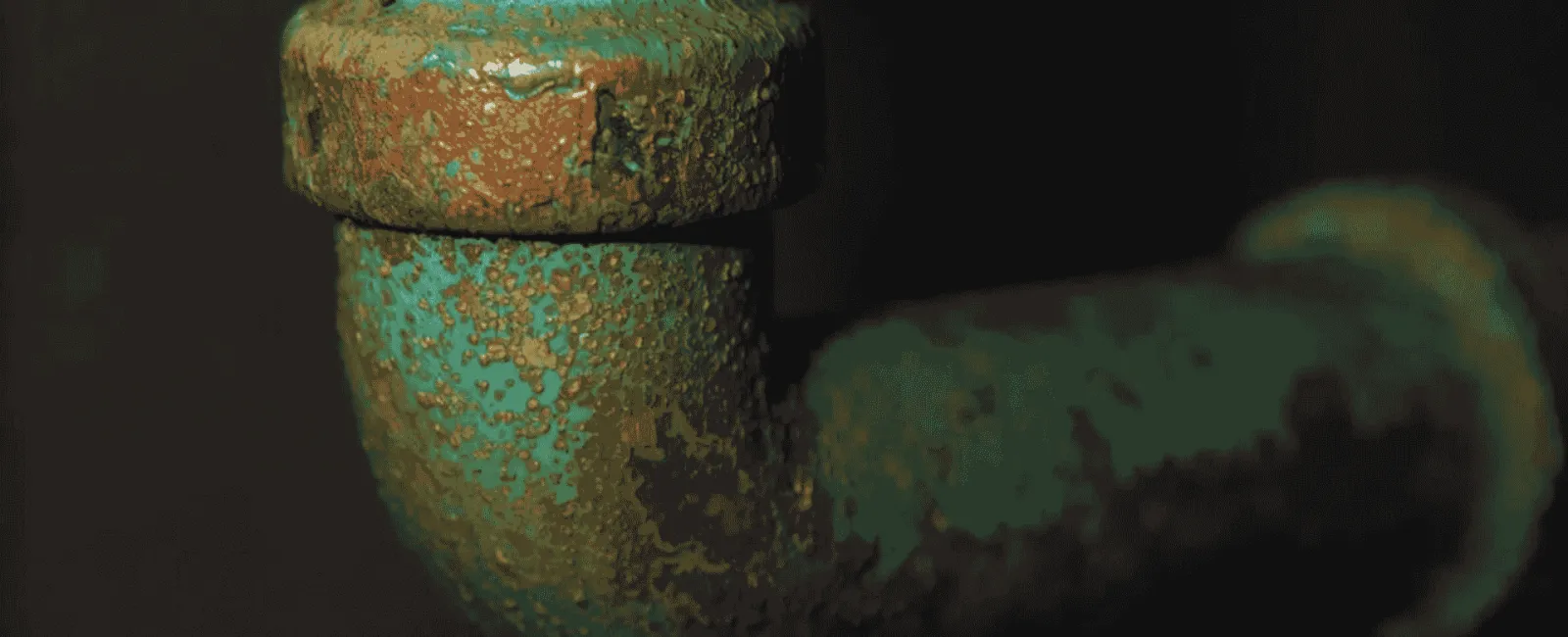
If you've noticed a greenish or blue-green discoloration forming on the outside of your copper pipes, you're probably wondering: Is this dangerous? Should I be worried? Do I need to replace my pipes?
The green substance on copper pipes is surprisingly common, especially in areas with high humidity, crawl spaces, and temperature fluctuations, which create the perfect environment for copper oxidation. After diagnosing copper pipe conditions in thousands of homes since 1923, our licensed plumbers can tell you exactly what that green coating means, when it's harmless, and when it signals a problem that needs immediate attention.
Here's what you need to know about green copper pipes and how to handle them.
What Is the Green Stuff on Copper Pipes?
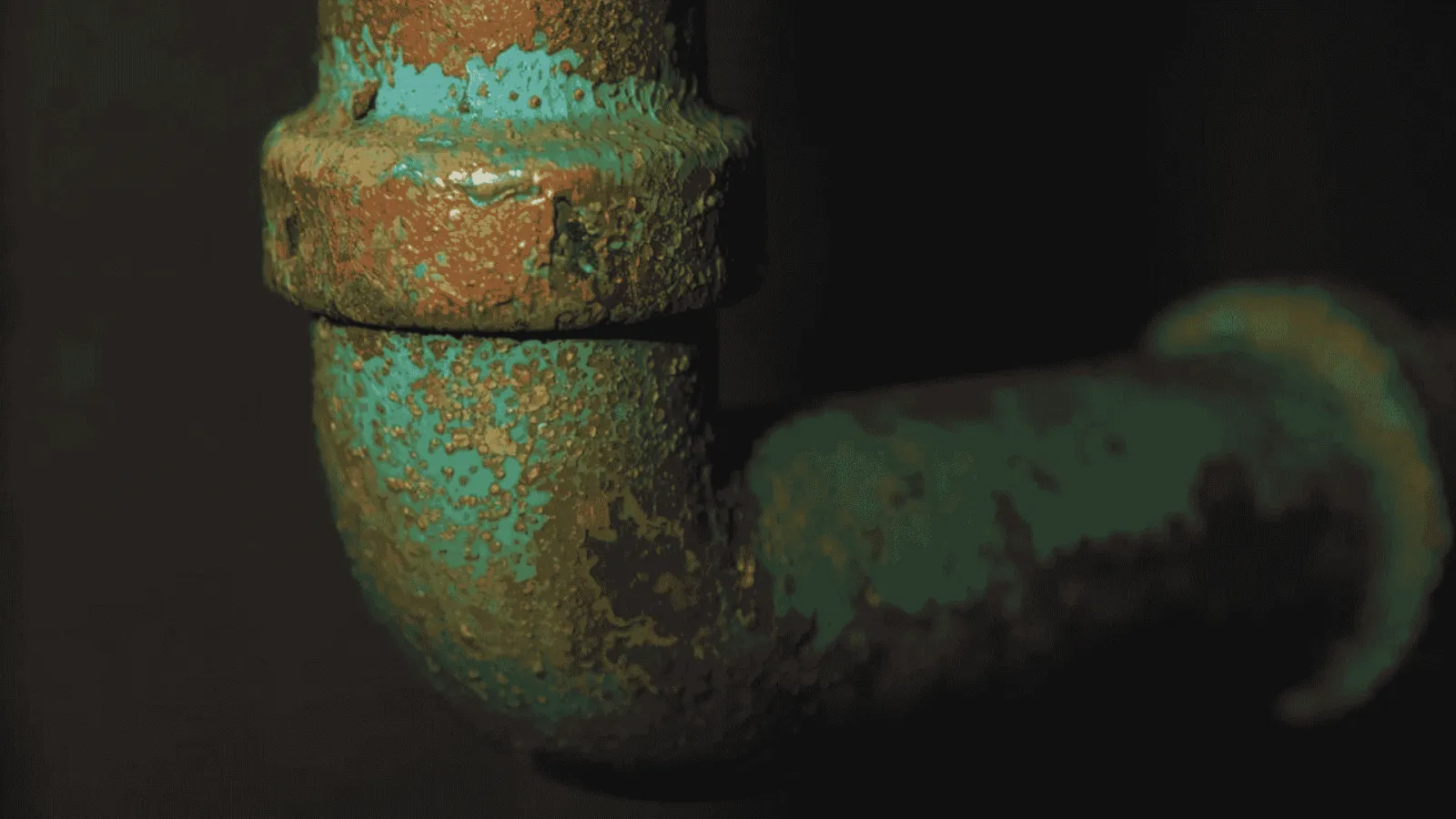
The green or blue-green coating you see on copper pipes is called verdigris, a form of copper carbonate that forms when copper reacts with oxygen, moisture, and carbon dioxide over time. This is the same natural process that turned the Statue of Liberty green.
The chemical reaction works like this:
- Step 1: Copper (Cu) + Oxygen (O₂) → Copper oxide (brownish layer)
- Step 2: Copper oxide + Moisture + Carbon dioxide → Copper carbonate (green patina)
This oxidation process is actually a natural protective mechanism. In many outdoor architectural applications (like the Statue of Liberty or copper roofing), the green patina is intentionally allowed to form because it creates a protective barrier that prevents deeper corrosion.
But here's the critical distinction: Green on the outside of your pipes is very different from green inside your pipes or green-tinted water. We'll explain why this matters below.
3 Causes of Green Copper Pipes (Ranked by Frequency)
Based on thousands of pipe inspections our licensed plumbers have performed throughout North Metro Atlanta, here are the three most common causes of green discoloration on copper pipes:
1. External Moisture Causing Verdigris (60% of Cases)
What's happening: When copper pipes are exposed to consistent moisture from humid air, condensation, or contact with damp surfaces, the oxidation process accelerates. This creates the characteristic green patina (verdigris) on the exterior surface of the pipe.
Common locations where this occurs:
- Crawl spaces with poor ventilation
- Basements with humidity issues
- Where pipes pass through concrete or brick walls (these materials retain moisture)
- Near water heaters where condensation forms
- Exterior walls with temperature differentials
- Areas with plumbing leaks that create ambient moisture
Why North Georgia is vulnerable: Our region's combination of warm, humid summers and temperature swings creates ideal conditions for copper oxidation. Crawl spaces often have moisture issues that accelerate this process.
Is it dangerous? In most cases, no. Light to moderate green patina on the outside of pipes is typically cosmetic. The patina actually forms a protective layer that can slow further corrosion. However, severe green buildup can indicate:
- Excessive moisture problems in your crawl space or walls (separate structural issue)
- A hidden leak is creating constant moisture
- Early-stage pinhole leak development (see Cause #3 below)
What to do: If the green is light and uniform across pipes in a humid area, it's usually fine. Address the underlying moisture issue (improve ventilation, fix humidity, seal crawl space) to prevent progression. Consult with professional plumbers for inspection.
2. Flux Residue from Soldering (25% of Cases)
What's happening: When copper pipes are joined during installation, plumbers use a chemical called flux to help solder flow and create a watertight seal. Flux is acidic and helps clean the copper surface for proper bonding. If flux residue isn't thoroughly cleaned off after soldering, it can cause green corrosion to form on the exterior surface near joints and fittings.
How to identify flux-related green corrosion:
- Green discoloration is concentrated only at soldered joints and fittings
- The rest of the pipe is clean and copper-colored
- Usually appears as green rings or halos around connections
- Most common in newer installations or recent plumbing work
- The green may appear crusty or powdery
Is it dangerous? No. Flux-related green corrosion is purely cosmetic and occurs only on the exterior surface. It does not affect water quality, pipe integrity, or structural strength. The flux has already done its job, helping create the solder joint; the residue is just sitting on the surface.
What to do: Flux residue can be cleaned off if it bothers you aesthetically, but it requires no action from a functionality standpoint. If you're having new plumbing installed, you can request that the plumber thoroughly clean joints after soldering to prevent this cosmetic issue.
3. Pinhole Leak Development (15% of Cases)
What's happening: Unlike the cosmetic verdigris and flux residue above, green discoloration from a pinhole leak indicates active corrosion eating through the pipe wall. This is the only truly concerning cause of green copper pipes.
Pinhole leaks occur when corrosion works from the inside out, eventually creating a tiny hole that allows water to seep through. The escaping water creates a constant moisture layer on the exterior surface, producing heavy, green corrosion concentrated around the leak point.
How to identify a pinhole leak:
- Green corrosion is concentrated in one specific spot
- The area feels damp or has visible water droplets
- Dark green or blue-green coloring
- May see white mineral deposits mixed with green
- The pipe surface may look pitted or eroded in that area
- Water stains on nearby surfaces
- A slight hissing sound when water is running
What causes pinhole leaks? Several factors contribute to pinhole leak development in copper pipes:
- Water chemistry: Acidic water (low pH below 7), high dissolved oxygen, or high chlorine content can corrode copper from the inside
- Pipe age: Copper pipes typically last 50+ years, but corrosion accelerates as pipes age
- Flow turbulence: Elbows and areas with turbulent water flow experience more wear
- Electrolysis: Contact between copper and dissimilar metals (like steel) can create galvanic corrosion
- Manufacturing defects: Rare, but thin spots in pipe walls can fail prematurely
Is it dangerous? Yes, in the sense that it requires repair. While not an immediate health hazard, a pinhole leak will:
- Worsen over time, expanding the hole and increasing water flow
- Cause water damage to surrounding structures (wood rot, mold, foundation issues)
- Waste water and increase utility bills
- Potentially indicates that other sections of the pipe are also deteriorating
What to do: Pinhole leaks require professional repair. A licensed plumber will assess whether to patch the specific leak or replace the affected section. If your home has older copper pipes (30+ years) and multiple pinhole leaks have developed, a repipe or section replacement may be more cost-effective in the long term than chasing individual leaks.
The Critical Distinction: Green Outside vs. Green Inside
This is perhaps the most important thing to understand about green copper pipes:
Green on the OUTSIDE of pipes: Usually harmless oxidation from external moisture. Cosmetic in most cases.
Green INSIDE pipes or green-tinted water: This is an entirely different, and more serious problem. Green water or green deposits inside pipes indicate:
- Copper leaching into your water supply (often from corrosive water chemistry)
- Potential health concerns if copper levels are elevated (EPA limit is 1.3 mg/L)
- The need for water chemistry testing and possible water treatment
- Potential pipe replacement if corrosion is advanced
If you're seeing green-tinted water or green staining in sinks and fixtures, that's a different issue requiring immediate professional assessment. Contact licensed plumbers for water quality testing and pipe inspection.
When to Call a Professional Plumber
Contact licensed plumbers for a professional assessment if:
- You suspect a pinhole leak - Look for damp areas, heavy green corrosion in one spot, or water staining
- Green corrosion keeps returning after cleaning - Indicates ongoing moisture problem or internal issue
- Your copper pipes are 30+ years old - Proactive inspection can identify deterioration before leaks develop
- You're seeing green-tinted water - Different problem requiring water chemistry testing
- Multiple areas of green corrosion have appeared - May indicate system-wide issues
- You're experiencing unexplained water bill increases - This could signal hidden leaks
- You're buying or selling a home - Plumbing inspections protect both parties
After 100+ years of diagnosing copper pipe conditions throughout North Metro Atlanta, our licensed plumbers have the expertise to distinguish cosmetic surface oxidation from serious corrosion issues. We use specialized inspection techniques and can provide water quality testing to give you a complete picture of your plumbing system's health.
The Bottom Line on Green Copper Pipes
In most cases, about 85% of the time, green discoloration on the outside of copper pipes is harmless cosmetic oxidation (verdigris) or flux residue from installation. These don't affect pipe function, water quality, or structural integrity.
Remember this critical distinction: green on the outside of pipes is usually fine; green inside pipes or green-tinted water is a serious problem requiring immediate professional assessment.
If you're unsure about green discoloration on your copper pipes, our licensed plumbers can inspect your system, assess pipe condition, test water chemistry if needed, and provide a clear diagnosis and recommendations.
Have questions about green copper pipes in your home? Contact our licensed plumbers for expert inspection and peace of mind.
Frequently Asked Questions
Is green on copper pipes dangerous?
Green on the outside of copper pipes is usually not dangerous. In 85% of cases, it's harmless surface oxidation (verdigris) caused by moisture exposure or leftover flux from installation. However, if the green is concentrated in one area with visible dampness or water staining, it may indicate a pinhole leak that needs repair. Green inside pipes or green-tinted water is a different, more serious issue requiring professional assessment.
Does green corrosion mean my copper pipes need to be replaced?
No, not usually. Light to moderate green oxidation on the outside of pipes is cosmetic and doesn't require replacement. Only replace copper pipes if: (1) You have confirmed pinhole leaks that are extensive, (2) The pipe surface is severely pitted or eroded, (3) You have multiple recurring leaks indicating system-wide deterioration, or (4) Your pipes are very old (40+ years) with signs of internal corrosion affecting water quality.
Why are my copper pipes turning green in my crawl space?
Crawl spaces create perfect conditions for copper oxidation due to high humidity, poor ventilation, and temperature fluctuations. Moisture in the air reacts with copper to form green verdigris (copper carbonate). This is especially common in areas with humid summers, and crawl space moisture issues accelerate the process. The green is usually harmless surface oxidation; address it by improving crawl space ventilation, installing a dehumidifier, or properly encapsulating the space.
Can I just paint over green copper pipes?
No, not recommended. Painting over green oxidation without cleaning and properly prepping the surface will trap moisture beneath the paint, potentially accelerating corrosion. If you want to paint copper pipes (unusual in residential applications), you must: (1) Clean off all green oxidation thoroughly, (2) Dry the surface completely, (3) Apply a metal primer designed for copper, (4) Use appropriate paint. However, leaving copper unpainted is generally preferred in most plumbing applications.


