
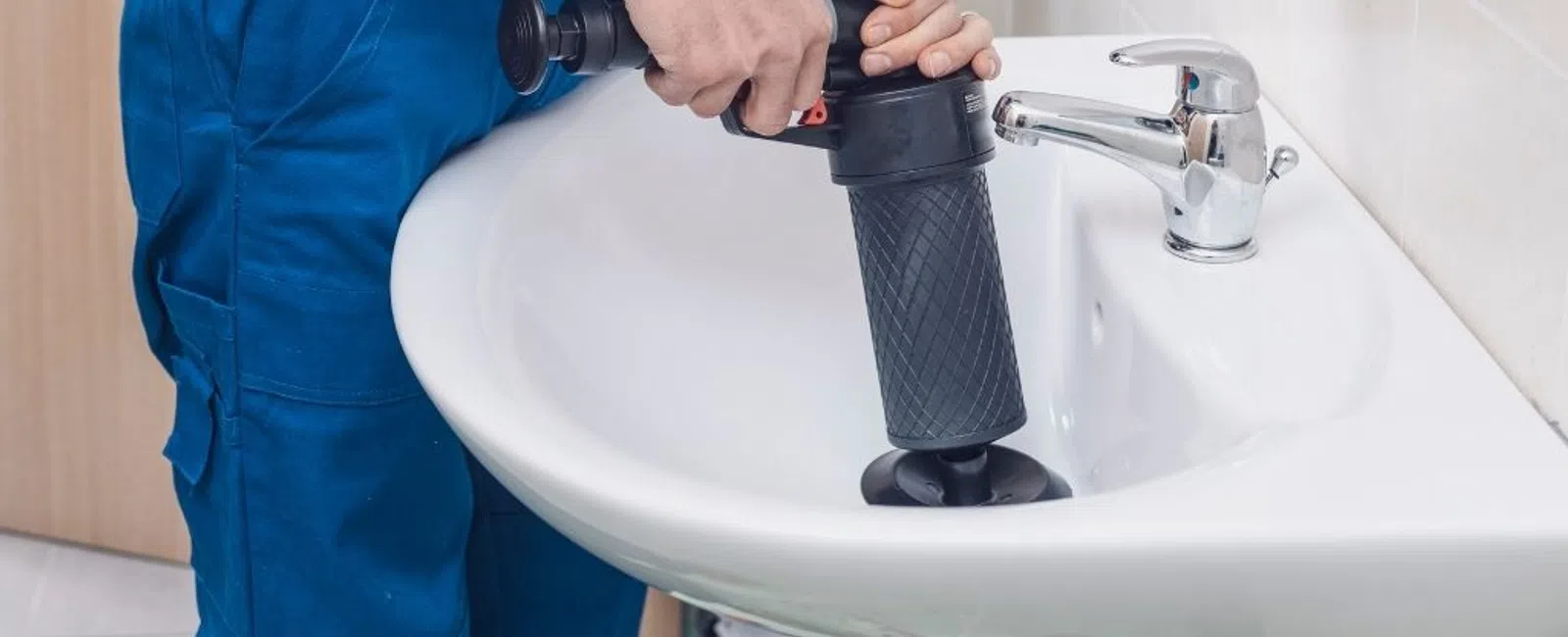
An auger for plumbing is a drain-clearing tool built around a long, flexible metal cable. A plumber feeds that cable into a drain until it reaches the clog, then rotates it so the tip grabs the blockage and pulls it out or breaks it apart so water flows again. A chemical drain cleaner only dissolves what it can reach on the way down, but an auger works mechanically and makes contact with the actual clog, which is why it's the tool our plumbers reach for first on stubborn blockages.
Toilet Auger vs Snake: What's the Difference?
It is important to know the distinction between the two, as the wrong tool on a toilet scratches porcelain and can push a clog deeper.
All augers are a type of snake, but not every snake belongs in a toilet.
A standard drain snake is a long, bare cable made for sinks, tubs, showers, and floor drains. The exposed cable is fine in those fixtures. In a toilet, it can scrape the visible bowl.
A toilet auger, also called a closet auger, is built for toilets. It has a rigid shaft with a rubber or vinyl boot at the bend. That boot cradles the cable and shields the bowl while the tip curves up through the toilet trap to reach the clog. Toilet augers are shorter on purpose, since a toilet clog almost always sits within the first few feet.
Can You Snake a Toilet? Or Should You Call Us?
A toilet clog can be cleared with a proper toilet auger, but the tool and the technique are what separate a clean fix from a cracked bowl. Our plumbers use a bowl-safe closet auger, seat it at the base of the trap, and work it under steady, gentle pressure so the porcelain stays intact. A bare drain snake scratches the bowl, and an auger paired with chemical drain cleaner puts caustic water where hands and porcelain don't want it.
A toilet that clears and then clogs again within a day or two isn't really a toilet problem and the pattern points to a blockage deeper in the line, which is where our drain cleaning services come in. Instead of reopening the same, we find the real cause and clear it.
Types of Augers and the Clogs They Handle
Different clogs call for different equipment:
Hand augers handle sink, tub, and shower clogs close to the fixture.
Toilet (closet) augers are the bowl-safe tools described above, shaped to slip through the trap without marking porcelain.
Drum augers hold a longer cable inside a housing for stubborn secondary lines.
Machine and sewer augers are powered units that drive 50 to 100 feet of heavy cable through main lines and cut through tree roots. The mature oaks and pines across Forsyth County and Metro Atlanta send roots straight into aging sewer joints, especially in older neighborhoods with red clay soil.
Keep Your Drains Clear With Professional Maintenance
A few simple habits slow buildup between visits. Keep grease and cooking oil out of the kitchen sink, use screens to catch hair in tubs and showers, and flush only waste and toilet paper, never wipes, even the ones labeled flushable.
For most Forsyth County homes, a yearly professional drain cleaning is what actually keeps buildup, backups, and odors from taking hold, and it matters even more for older homes and properties with large trees near the sewer line. Our maintenance visits clear the line properly and catch small issues early, before they turn into an after-hours emergency.
Total Mechanical Care has handled North Georgia's drains for generations, and our licensed plumbers carry the full range of augers and machine equipment to help your needs while offering 24/7 emergency service backed by a satisfaction guarantee.
Reach us today and we can help you get started.


