
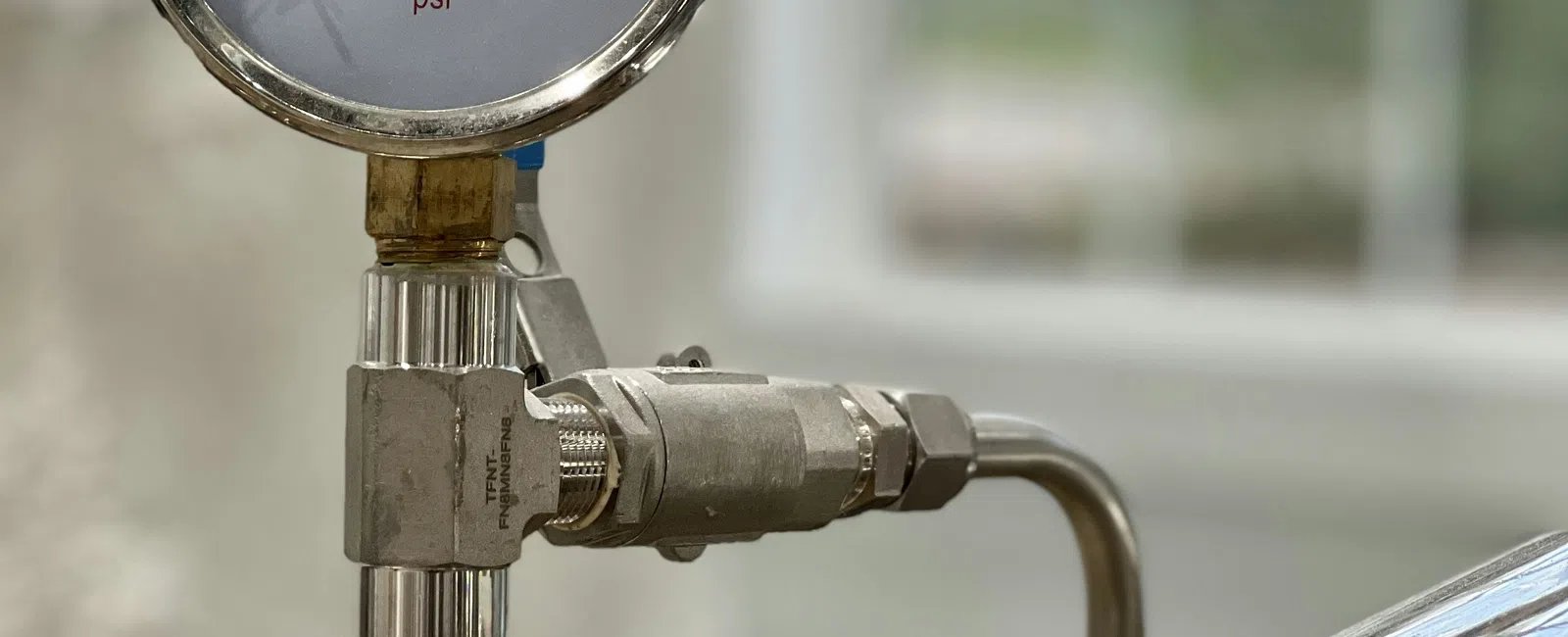
A water pressure regulator, also called a pressure reducing valve or PRV, sits where the main water line enters the house and drops the incoming municipal pressure to a level the home's plumbing can handle safely, usually between 40 and 60 psi. Most regulators last 10 to 15 years, and when one starts to fail it does so in one of two directions: it sticks open and lets the full force of the city main into the house, or it clogs and chokes the flow to a trickle. Both are damaging, and send the same signals long before the regulator gives out completely. If you catch it early, it is an easy fix but if you do not, the pressure will just keep working away at your pipes, your seals, and your appliances until they start failing.
What a Water Pressure Regulator Does
The municipal supply that feeds most homes in Cumming, Alpharetta, Roswell, and the rest of Metro Atlanta runs at a pressure meant to push water across a whole distribution system, and it often arrives at the property line well above what residential plumbing is rated for. A water pressure regulator is the device typically found near the main shut-off valve where the supply line enters the house, that steps that pressure down. Inside it, a spring-loaded diaphragm holds the outgoing pressure steady no matter how the incoming pressure changes. When that diaphragm or spring wears out, or sediment builds up inside the valve body, the regulator loses its grip on the pressure and the household plumbing feels it.
Signs of a Bad Water Pressure Regulator
The symptoms fall into two groups depending on how the valve is failing. Recognizing which group a home is in points straight to the cause.
| Failure mode | What you notice | What it means |
|---|---|---|
| Stuck open (high pressure) | Faucets spray hard, toilets refill loudly, pipes bang, faucets and seals wear out fast | Diaphragm failed; full municipal pressure is entering the house |
| Clogged or seized (low pressure) | Weak flow at every fixture at once, worse when two are running | Sediment has choked the valve and restricted flow |
| Worn spring (fluctuating) | Pressure rises and falls on its own; hissing or whistling at the regulator | Internal spring or diaphragm can no longer hold a steady setting |
High-Pressure Failure
When the diaphragm fails or the valve sticks open, full municipal pressure enters the house. Faucets spray harder than usual and toilets refill with a loud rushing sound. Pipes bang or hammer when a faucet or appliance shuts off, because water moving at high pressure slams to a stop against a closed valve. Faucet washers and appliance seals wear out fast, so a household that suddenly finds itself repairing dripping faucets, running toilets, and leaking supply lines in quick succession is often dealing with excess pressure rather than a run of bad luck. Left alone, sustained high pressure shortens the life of the water heater, dishwasher, and washing machine, and in the worst cases it splits a pipe or blows a supply line.
Low-Pressure Failure
When sediment clogs the valve or the internal parts seize, the regulator chokes down and restricts flow. Showers go weak, especially when a second fixture is running, and every tap in the house feels underpowered at once. That house-wide drop is the tell. A single weak fixture usually points to a problem at that fixture, but low pressure everywhere at the same time points upstream to the regulator or the supply.
Fluctuating Pressure
Pressure that rises and falls on its own, strong one minute and weak the next, means the internal spring or diaphragm is worn and can no longer hold a steady setting. A hissing or whistling noise coming from the regulator itself is a related sign, caused by water forcing its way through a valve that no longer seats correctly.
What Causes a Water Pressure Regulator to Fail
Age is the most common cause. The rubber diaphragm and spring inside the valve wear out with constant use, which is why most regulators need replacing every 10 to 15 years.
Sediment and mineral buildup are the second cause, and they matter more in areas with hard water or well supply, where deposits collect inside the valve body and either jam it or wear it down. The hard water common across parts of Forsyth and Cherokee counties accelerates this.
Corrosion is the third, as the brass body and internal parts degrade over years of exposure to water and minerals. A regulator that was undersized or installed incorrectly also fails early, which is one reason a professional installation matters.
How to Check Your Water Pressure Regulator
A homeowner can get a rough reading by threading a pressure gauge onto an outdoor spigot or a laundry faucet and turning the water on. A reading above 80 psi means the pressure is high enough to damage the plumbing and the regulator is likely not doing its job. A very low reading points to a clogged or seized valve. This test confirms that something is wrong, but it does not confirm the regulator is the cause or that adjusting it will fix the problem, because the same readings can come from a supply issue, a partially closed valve elsewhere, or a leak. A licensed plumber takes pressure readings at multiple points, checks the pressure on both sides of the regulator, and inspects the valve body for corrosion and sediment before deciding whether it needs adjustment or replacement.
Adjusting Versus Replacing the Regulator
A regulator that is still mechanically sound can sometimes be brought back into range with an adjustment. Loosening the lock nut and turning the adjustment screw changes the outgoing pressure, clockwise to raise it and counterclockwise to lower it. When the valve itself is worn, clogged, or corroded, adjustment does not hold, because the internal parts can no longer maintain whatever setting they are given. In that case the regulator has to be replaced.
Replacement is a contained job for a licensed plumber, generally an hour or two, and it involves shutting off the main, removing the old valve, and fitting a correctly sized new one. Because the work happens on the main line at the point where all the home's water enters, a mistake here affects the entire house, which is why it belongs with a professional rather than a trial-and-error adjustment that can leave the home with pressure that is still wrong.
Why This Matters for North Georgia Homes
High incoming pressure is common across the built-up parts of Metro Atlanta, where municipal systems push hard to serve dense, growing suburbs. That makes a working regulator essential rather than optional, and it makes a failed one more damaging, since the pressure waiting on the other side of that valve is substantial. Homes on well systems in the outer counties have their own version of the problem, where pressure tank and pump settings interact with the regulator. In both cases, a regulator that has quietly failed subjects every pipe, joint, fixture, and appliance in the house to stress it was never meant to carry. The regulator is only one of several things that can change a home's pressure, so it is worth ruling out the other common causes of a sudden pressure change as well. Total Mechanical Care tests, adjusts, and replaces pressure regulators across the region, and can confirm whether the regulator is the real cause or a symptom of something further up the line.
Get Your Water Pressure Back to Normal
We have served North Georgia homeowners for generations, backed by more than 100 years of combined plumbing experience. If faucets are spraying, pipes are banging, or pressure has dropped across the house, the team will test the system, pinpoint the cause, and replace a failed regulator with flat-rate pricing agreed before the work starts and a satisfaction guarantee. Contact us today and get your home's water pressure back to where it belongs.

